Compliance with the Procedural Code

2025 Compliance Report Cards

Compliance with the CCTS’ Procedural Code

PSPs are required to comply with the complaint-handling process outlined in the CCTS’ Procedural Code. PSP compliance with these requirements is integral to the CCTS’ ability to carry out our role effectively and efficiently.

This report card highlights some observations and trends regarding PSP compliance with the CCTS Procedural Code requirements between August 1, 2025 and January 31, 2026.

Our approach

Our goal is to promote PSP compliance with the CCTS Procedural Code requirements by working with PSPs throughout the complaint process. When PSPs fail to comply with these requirements, it impacts their customers and the effectiveness and efficiency of the CCTS complaint process. For example:

  • If a PSP does not implement a complaint resolution or Investigation Finding, it deprives the customer of the remedy they are entitled to.
  • If a PSP charges the customer fees or threatens the customer for filing a complaint with the CCTS, it punishes the customer for exercising their right to recourse.
  • If a PSP does not cooperate with a CCTS investigation, submits late responses to the CCTS or fails to provide relevant information, the CCTS’ complaint-handling process takes more time.

The CCTS monitors PSP compliance with the complaints process throughout the year. This report highlights some of the PSPs’ non-compliance issues we observed from August 1, 2025, to January 31, 2026 at the mid-point of the CCTS’ fiscal year. The CCTS reports on the full year of compliance activity in our Annual Report.

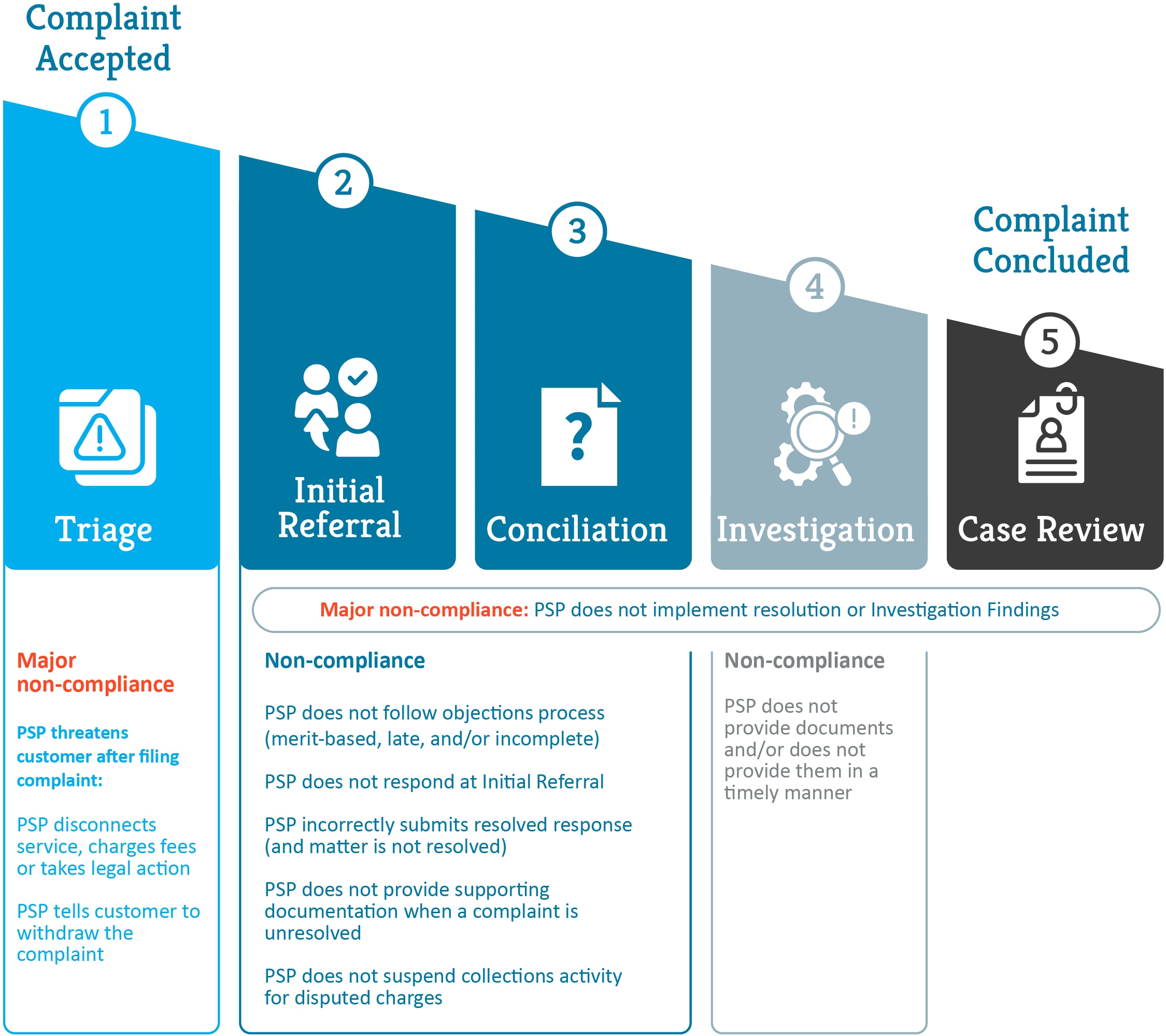
Figure 2.1: How PSPs need to comply with CCTS complaints process

Observations on Procedural Code non-compliance

The CCTS’ Mid-Year Report indicated that the CCTS resolved or issued Investigation Findings in over 14,000 complaints from August 1, 2025 to January 31, 2026. During that six-month period, the CCTS confirmed 12 instances of service providers failing to implement resolutions to which they had agreed, or to implement remedies the CCTS required in an Investigation Finding.

The CCTS observed the following regarding PSP compliance with the complaint-handling requirements of the Procedural Code:

  • PSPs failed to implement resolutions to which they had agreed or failed to implement required remedies for customers in formal Investigation findings.
  • The CCTS terminated the participation of EasyVoice Telecom Inc. for its failure to implement six Investigation Finding Reports – with two of them occurring in the time period for this report. The CCTS required EasyVoice to provide remedies to all six of these customers. To date, the customers have been deprived of the CCTS’ required remedies, such as honouring the customer cancellation and refunding customers for improper charges.

Some PSPs failed to implement resolutions and Investigation Findings

Mutually accepted resolutions[9] and Investigation Findings[10] are binding on PSPs and must be implemented.  When a PSP does not implement a resolution or Investigation Finding, the CCTS considers it to be an instance of major non-compliance with the Procedural Code because the PSP has deprived their customer of the remedy to which they are entitled, such as providing a refund or correcting the customer’s credit report. When a customer informs us and the CCTS determines that the PSP did not fulfill its obligation, the Compliance team works swiftly with the PSP to ensure implementation.

From August 1, 2025, to January 31, 2026, the CCTS identified 12 confirmed instances of PSP failure to implement resolutions and Investigation Findings, which include:

  • 9 instances where the PSPs rectified the matter after engagement with the Compliance team and the customers confirmed receipt of their agreed-upon remedy from the complaint process;[11]
  • 1 instance where the PSP did not rectify the matter and the CCTS is engaging the PSP to ensure the non-compliance is rectified; and,
  • 2 instances of EasyVoice Telecom’s failure to implement Investigation Findings, which we explain in the next section.

This is an increase in the number of PSPs failing to implement resolutions and Investigation Findings. Last year, the CCTS reported 9 confirmed breaches from August 1, 2024 to January 31, 2025. We have confirmed 12 breaches at the mid-point of this year.  Most of these issues arose because the PSP did not implement the resolution in a timely manner.  After the customer contacted the CCTS when they did not receive the resolution they expected, the CCTS reached out to the PSPs to ensure the resolution or Investigation Findings were implemented. After contacting the PSPs, the remedies were implemented but we determined that implementation wasn’t done so in a timely manner. We urge providers to ensure remedies are implemented in a timely manner following the resolution or closure of a complaint.


PSPs must implement resolutions and Investigation Findings

Case Summary

Case summary: PSP delayed carrying out resolution

A customer contacted the CCTS after their provider charged activation fees for two wireless phone lines, which contradicted what the customer was informed they’d be charged.  After submitting a complaint to the CCTS, the PSP and customer mutually agreed on a resolution. The PSP agreed to refund the activation fees ($170) in the form of a cheque.  The PSP advised the CCTS that the complaint was resolved in October 2025.

The customer contacted the CCTS in January 2026 to inform us that they had not yet received the refund cheque.

The CCTS Compliance team engaged the PSP to remind it of its obligation under the Participation Agreement and the Procedural Code to ensure that resolutions are implemented. The Compliance team instructed the PSP to remedy this non-implementation and demonstrate that the refund had been sent to the customer. The PSP complied and subsequently provided confirmation that the customer was issued a new cheque. The customer confirmed shortly thereafter that they had received the refund cheque.

EasyVoice Telecom Inc. CCTS participation terminated for non-compliance

The CCTS terminated the participation of EasyVoice Telecom Inc. (EasyVoice) for depriving six customers of remedies required by the CCTS in six Investigation Finding Reports. Two of these complaints were concluded in the reporting timeframe (August 1, 2025 – January 31, 2026) while the other complaints were concluded in the previous reporting period.

EasyVoice customers complained about issues such as loss of service, cancellation requests being ignored, and being billed after cancelling or when no service was being delivered.  The CCTS engaged EasyVoice during the investigations on multiple occasions and requested documentation for each complaint.

The CCTS issued findings after the investigations into the six customer complaints. We determined that EasyVoice did not adhere to its obligations towards its customers in these complaints, and required that EasyVoice provide remedies to each customer. EasyVoice was unresponsive to the CCTS’s repeated attempts to contact them, and no Case Review request was received for any of the Investigation Finding Reports. Therefore, EasyVoice was deemed to have accepted our findings.

The CCTS investigations required EasyVoice to fix the problems, such as honouring the customer cancellation and refunding customers for improper charges. These EasyVoice customers confirmed they did not receive their required remedies. Participating service providers must implement remedies prescribed by the CCTS.  The CCTS made several efforts to communicate and work with EasyVoice to resolve these issues. When a PSP fails to implement remedies in Investigation Finding Reports, the CCTS considers this major non-compliance with the complaints handling process.

EasyVoice’s termination from CCTS participation due to its failure to rectify the major non-compliance puts the provider in violation of the Canadian Radio-television and Telecommunications Commission’s (CRTC) regulatory requirement to participate in the CCTS.  As a result, EasyVoice customers with unresolved issues no longer have access to CCTS’ independent complaint handling process. The CCTS referred EasyVoice to the CRTC for consideration of potential enforcement action.

Monitoring PSP compliance with the complaint-handling process

For the CCTS to resolve complaints effectively and efficiently, we need PSPs to act responsibly and comply with the CCTS complaint process. When PSPs comply with the rules and cooperate in good faith in the CCTS process, complaints are handled more efficiently and effectively, contributing to customer satisfaction. Ultimately, it is in the interest of all parties – customers, PSPs and the CCTS – to ensure that complaints are handled effectively and efficiently.

We continue to monitor PSP compliance with the rules and report on compliance results. We continue to develop and provide proactive guidance on compliance through videos, knowledge articles and checklists to ensure PSP compliance with the complaint handling rules.

Checklist: Compliance with the CCTS Procedural Code

PSPs must implement resolutions and Investigation Findings

Mutually accepted resolutions and Investigation Findings are binding on PSPs and must be implemented. When a PSP does not implement a resolution or Investigation Finding, the CCTS considers it to be major non-compliance with the Procedural Code because the PSP has deprived its customer of the remedy, such as processing a credit or refund or correcting the customer’s issue (e.g. service reconnection or credit reporting). The CCTS treats these complaints with high priority and takes action right away.

PSPs must not ask customers to withdraw their complaint at the CCTS

PSPs asking a customer to withdraw their complaint at the CCTS is an issue of major non-compliance. When a PSP engages in this behaviour, the PSP is not participating in good faith as it is trying to circumvent the requirement to respond to complaints. This type of situation can create problems later, as the customer will be unable to benefit from the protection of the CCTS Procedural Code if the PSP fails to implement an agreed-upon resolution after the customer withdraws their complaint.

When the CCTS finds out that a PSP has asked a customer to withdraw their complaint, the CCTS informs the customer of their right to continue with the complaint-handling process and explains the risks of withdrawing their complaint. In particular, the CCTS informs the customer that if a complaint is withdrawn, then the CCTS will likely be unable to help ensure that the PSP implements the resolution it promised the customer as the enticement for withdrawing the complaint.

PSPs must not threaten customers with legal action, fees, or disconnection of service because of the CCTS complaint

Customers should not be threatened by a PSP for complaining to the CCTS: it is the customer’s right to seek recourse, and they should not be penalized for exercising that right. The CCTS tracks these allegations and considers them to be instances of major non-compliance when we can reasonably conclude that the PSP engaged in this unacceptable behaviour. The CCTS treats these cases with high priority: we inform the PSP that it is not allowed to make such threats and seeks confirmation that the offending conduct will stop immediately.

PSPs must follow the rules when objecting to complaints

The CCTS Procedural Code allows the CCTS to accept telecom and television-related complaints, with certain exceptions. PSPs have the right to object to the CCTS accepting a complaint if they believe it falls within one of these exceptions. A recent change to the rules now requires PSPs to file objections within 10 days of being informed that the CCTS has accepted the complaint, instead of the previous 15-day timeframe.

When filing an objection, PSPs must clearly state the reason and provide supporting documentation for the CCTS to evaluate its validity. If a PSP objects to a complaint but fails to follow the required procedure, it is considered a breach of the Procedural Code. Common objection-related breaches include submitting an objection late, failing to provide an explanation or supporting evidence, or objecting on an improper basis, such as disputing the merit of the customer’s complaint rather than its eligibility under the rules.

Non-compliance with objection rules causes unnecessary delays in the complaint process and hinders the effectiveness of the CCTS. Each year, we track objection-related breaches, and we will continue monitoring PSP misuse of the objections process.


PSPs must confirm with the customer that a complaint is resolved

If a PSP and customer mutually agree to resolve a complaint at the initial referral stage, the PSP must provide a written response to the CCTS and to the customer indicating that the complaint is resolved. After a PSP tells the CCTS that a complaint is resolved, the customer has 20 days to dispute the response submitted by the PSP. PSPs should only inform us that a complaint is resolved when it has confirmed with the customer that it has reached a mutually accepted resolution, or when it provides the full resolution that the customer requested.

PSPs must respond and provide required information for unresolved complaint

If a PSP and customer cannot agree to a resolution at initial referral, the PSP is required to provide a written response to the CCTS and indicate that the complaint remains “unresolved”.

  • When PSPs provide timely information and documents, the CCTS may review the complaint at the Conciliation stage where we may be able to help conclude complaints earlier in the process, increasing efficiency and cost effectiveness of the CCTS’ services.
  • When PSPs do not provide documentation and/or do not respond at all, the CCTS may proceed directly to an investigation to determine whether the provider met its obligations. The CCTS will seek information from the PSP, and Investigation Findings are issued.

We expect that more PSPs will provide the CCTS with all relevant documents with their unresolved response in the future to get the full benefit of the CCTS’ conciliation processes.

PSPs must provide all requested documentation at Investigation in a timely manner

When the CCTS investigates a complaint at Investigation the CCTS requires PSPs to provide requested documents and information in a timely manner.  It is crucial that PSPs provide this information before the CCTS concludes its Investigation Findings because this information will not be taken into consideration afterwards.  When PSPs fail to provide the requested documents or do not respond in a timely manner, it:

  • delays the investigation of a complaint; and
  • may result in adverse findings against the PSP concerning whether it met its obligations to the customer.

In other words, it is imperative for PSPs to comply with this requirement to avoid unnecessary delays and be afforded the opportunity to provide its “side of the story” to the CCTS during the complaints process.

PSPs must suspend the collections activity on disputed charges

When a customer submits a complaint, PSPs must suspend collections activity for an unpaid charge that the customer is disputing in their complaint, until the complaint is resolved or otherwise concluded. Some examples of the type of collections activity that PSPs should refrain from engaging in include reporting the unpaid charge to a credit reporting agency or bureau, contacting the customer to remind them of an unpaid balance which includes the disputed amount, and threatening to suspend the customer’s service or initiate collections activity if a disputed balance remains unpaid. When PSPs do not comply with this requirement, the CCTS will intervene and ask the PSP to take steps to stop further collections activity against the customer.

Footnotes

  1. Mutually acceptable resolutions are agreements between the PSP and the customer on a specific outcome or actions to be carried out to resolve a complaint filed with the CCTS.
  2. The CCTS issues Investigation Findings after a complaint is fully investigated. Investigation Findings are a written report of the result of our analysis and assessment of the complaint. We base our Findings on the information and documents the customer and the service provider provide to us. These Findings explain whether the service provider met their obligations to the customer. If they did not meet their obligations, the Findings explain what the provider must do to correct the issueand the provider is required to implement these actions.
  3. 3 complaints with Rogers, 3 complaints with TELUS, 1 complaint with Bell Canada, 1 complaint with Koodo and 1 complaint with Fido.