



Compliance with the CCTS’ Public Awareness Plan

2025 Compliance Report Cards

Canadians need to be aware of the CCTS and easily access information about it when they have unresolved disputes after trying to resolve them with their telecom and TV service providers. We recognize the ongoing importance of ensuring that the public knows about the services the CCTS provides and how to reach the CCTS when needed.

Participating Service Providers (PSPs) must comply with Developing Public Awareness of the CCTS (the Public Awareness Plan) and promote awareness about the CCTS to their customers.

To ensure PSP compliance, the CCTS conducts a review each year to:

  • assess compliance and identify any instances of non-compliance with the Public Awareness Plan;
  • engage with PSPs that have non-compliance issues to ensure that issues are addressed in a timely manner; and
  • take enforcement action against PSPs that do not comply.

This report card highlights our findings about PSP compliance with the Public Awareness Plan from Fall 2025.

Recent developments

In 2025, the telecommunications and broadcasting regulator, the Canadian Radio-television and Telecommunications Commission (CRTC) initiated a public consultation on improving customer awareness of the CCTS. After a temporary pause, the CRTC reinstated the proceeding to understand the timing and manner in which service providers inform customers about the CCTS.  Based on the CRTC-commissioned public opinion research survey data and the service providers’ explanations to the CRTC regarding their public awareness activities[1], the CRTC proposed its preliminary view that there is evidence of low awareness indicating that customers with unresolved complaints are not being informed of the CCTS effectively.[2] The CRTC invited proposals from service providers regarding what changes would be effective and efficient regarding their customer complaint resolution processes. The CRTC also invited consumer groups to comment on why customers with unresolved complaints are insufficiently informed about the CCTS and what solutions would work. The CCTS will participate in the consultation.

The CCTS surveys customers that have used our services after their complaint is concluded to obtain customer feedback on our process and understand how they learned of the CCTS. We publish customer survey results in each of our Annual Reports. In 2024-25, few customers reported seeing information about the CCTS from their provider’s website (23%), on their bill (18%) or being told by their provider about the CCTS (7%).[3] Moreover, 40% of customers reported that they tried for more than two months to resolve their problem directly with their service provider before turning to the CCTS for help.[4] This feedback helps us assess the effectiveness of the PSP Public Awareness Plan.

Requirements

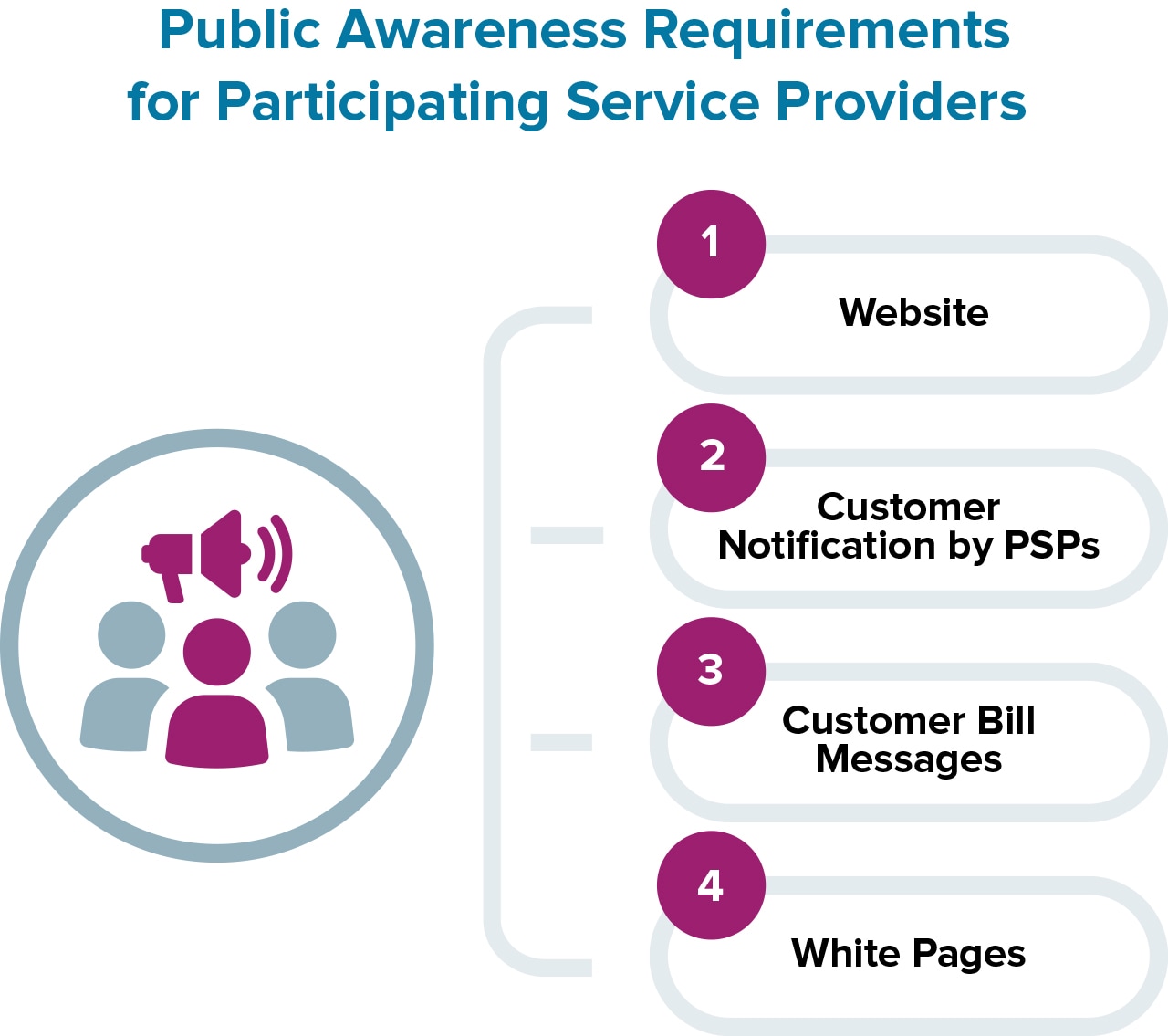
The Public Awareness Plan requires PSPs to inform their residential and small business customers about the CCTS in English and French as follows:

Our approach

Our goal is to encourage compliance through educating and engaging PSPs about the requirements of the Public Awareness Plan. This year, we sent several reminders about the Public Awareness Plan to all PSPs. In the reminders, we urged PSPs to self-assess their compliance with Public Awareness Plan requirements ahead of our scheduled audits and reminded them about how to find available CCTS guidance on ensuing compliance with requirements.

The CCTS annually audits:

  • PSP websites: a review of all PSPs that are audited to ensure that all the required CCTS information is available for customers on the PSP’s website.
  • PSP documentation: a review of PSP invoices, white pages, and internal documents about the PSP’s complaint-handling process for the 25 PSPs that generated the most CCTS complaints in the previous year.

The CCTS shares its audit results for each audited PSP with the PSP. When we find issues of non-compliance, we contact the PSP, provide an explanation, and request that the PSP identify how and when it will come into compliance. Our Compliance team works with PSPs until all identified issues have been resolved, and we publicly identify any service providers who refuse to comply.

PSP websites

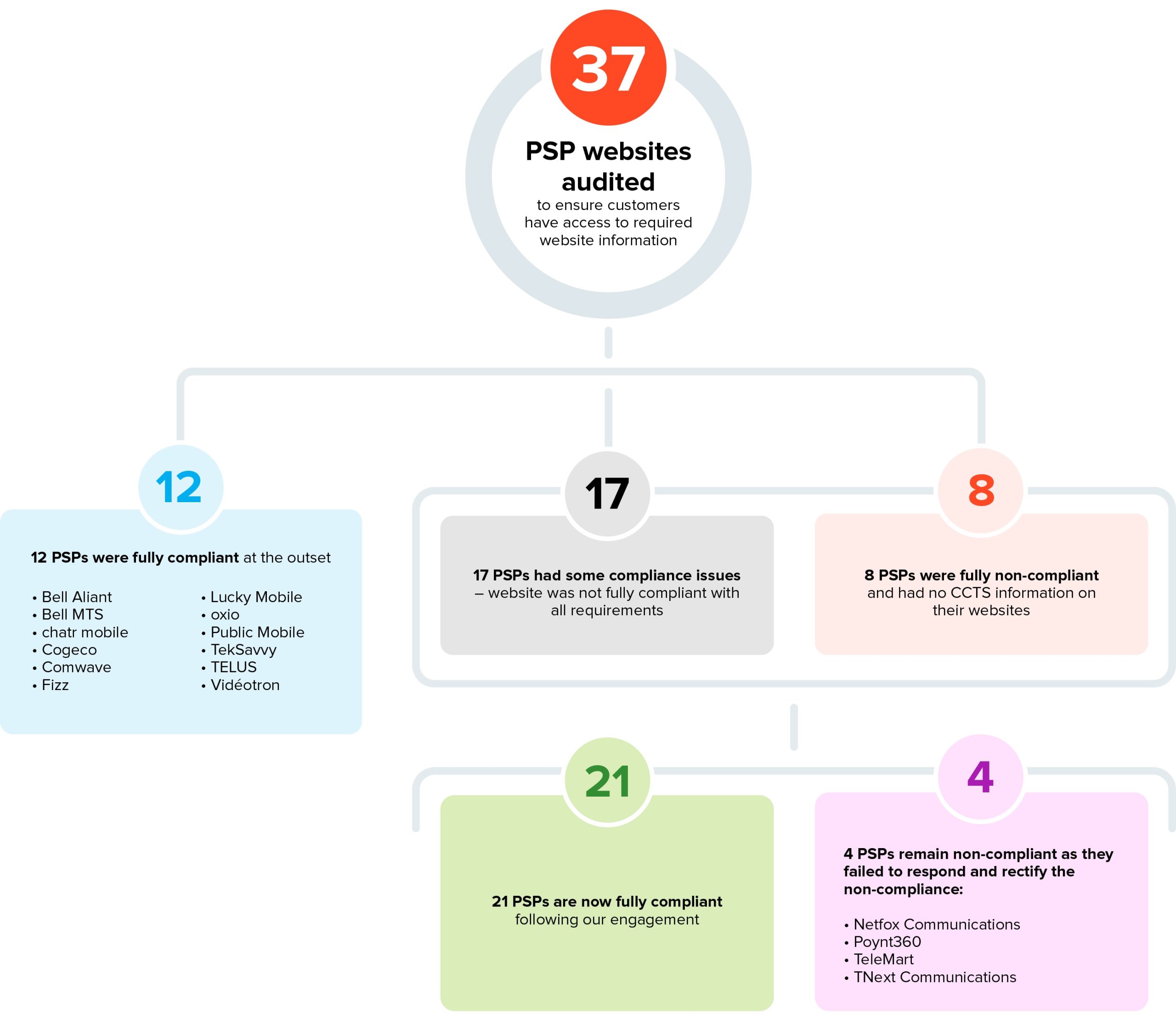
In 2025, the CCTS audited 37 PSPs[5] to ensure their customers have access to the required website information and found that 8 out of 37 audited PSPs (22%) did not have any information about the CCTS on their websites. This is lower than the results from the previous four years (28 – 32% non-compliance). The providers without information about the CCTS on their websites in 2025 were mostly small PSPs. We collaborated with service providers who did not comply with the CCTS website requirement. As a result, 21 out of 25 PSPs are either in the process of updating their website or have already updated their websites to comply with the CCTS website requirement.

Although most audited PSPs had some information about the CCTS on their websites prior to being audited, many of the issues we found were about how and where the CCTS information was presented. Overall audit results are in the graphic below.

Trends Observed

The CCTS highlights some of the trends seen in the past few years of our Compliance Program.

Trend 1: PSP compliance with website requirements is similar to 2024 observations

Compliance levels were similar to what we observed in 2024.  The results showed that 11 of the top 24 PSPs[6] (compared to 14 in 2024) were fully compliant from the onset. Of the 13 smaller PSPs audited, only 1 PSP was fully compliant from the onset.

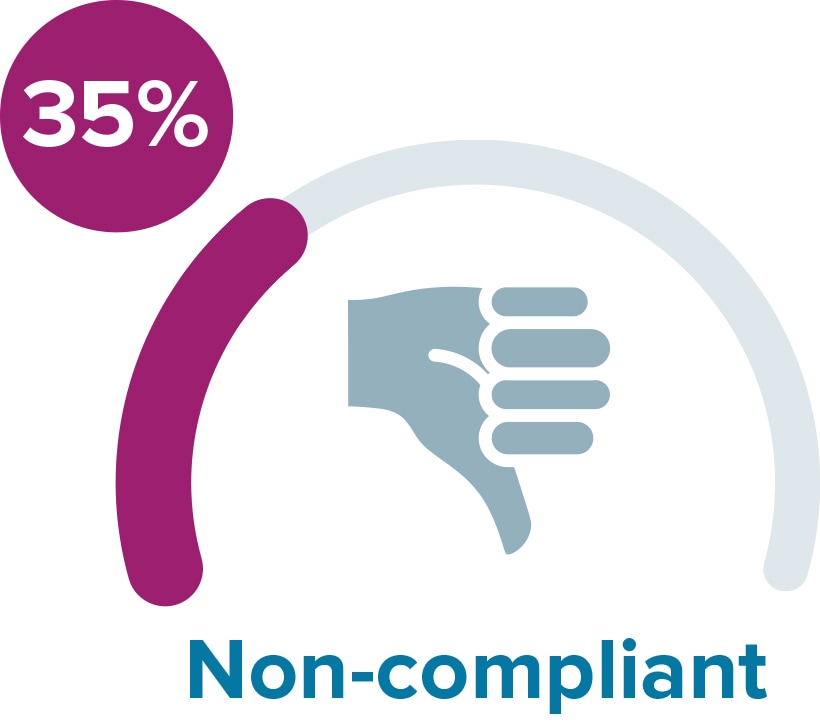
For all 37 PSPs audited, 32% of the PSPs were fully compliant initially, compared to 32% in 2024 and 35% in 2023.

Figure 1.1: PSPs compliance with website requirements – year over year

Trend 2: Twelve of the top 24 PSPs have more than one complaints-handling webpage

The Public Awareness Plan requires PSPs to have a complaint-handling webpage that provides customers with information about their own complaint-handling process and information about the CCTS. The objective is to ensure that customers with concerns about their service will be able to inform themselves easily on the methods available to them to communicate with their provider, and, in the event of unresolved concerns after unsuccessfully raising those concerns with their provider, customers are informed about the CCTS.

The CCTS recently observed that 12 of the top 24 PSP websites have more than one complaints-handling page providing information to customers about the PSP’s own internal complaint-handling processes but only one of those pages has the CCTS information.  This frustrates the Public Awareness Plan objective because it fragments information available to customers: customers who are trying to navigate provider websites to understand their options when they have a concern may not be provided with information about the CCTS.  It is in the interest of PSPs to ensure that there is one complaints-handling page – as intended by the Public Awareness Plan – which consistently provides all of the appropriate information about the PSP’s complaint-handling process to all customers so that they are not confused about how they can address their complaints.

Moving forward, the CCTS expects PSPs to have one complaints-handling page – as required by the Public Awareness Plan – which also includes the CCTS information.

Figure 1.2: Rate of non-compliance with search function

Trend 3: Half of PSP websites did not return search results for CCTS

In 2025, the websites of 24 of the 37 PSPs we audited had a search function. The search function on a PSP website is a crucial tool for customers to find information. PSPs must ensure that using a search function on their websites results in providing the required CCTS information to customers on residential, small business, French, and English websites.  If search results do not display CCTS information on all of a PSP’s websites, the CCTS considers the PSP non-compliant. We found that 12 of the 24 PSP websites (50%) that had a search function did not return CCTS information when searching for all keywords related to ‘‘CCTS’’ and “complaints.”

Although audited PSPs have become more compliant with the search requirement in the last few years, this remains an important area of focus for our compliance efforts going forward.

The CCTS has reminded PSPs about the search function requirement each year in our Compliance Report. We notified PSPs that they should check their websites to ensure compliance and that we would publicly name those PSPs which were repeatedly non-compliant.  Despite this messaging, we continue to see at least half of PSPs not complying with the search function requirement.

In the past 3 years, we observed Koodo was non-compliant with the website search function requirement.  In the past 2 years, Bell Canada and Virgin Plus were non-compliant with the requirement. The main issue for these PSPs was that searching their website (either business or residential) for all 6 keywords did not result in the required CCTS information.

Overall, this is concerning given that these PSPs have been audited for compliance with the Public Awareness Plan since 2017 and they are well aware of this requirement. When we have pointed out their deficiency over the past few years, PSPs have been responsive to remediate the non-compliance issue, but in the following annual audit, similar deficiencies were found.

PSPs can ensure compliance with the search function requirement by implementing an internal control process for website updates. We continue to urge all PSPs to implement internal processes and regular checks to ensure that website updates do not change the CCTS-related results that must be returned by the search function.

Trend 4: One third of the PSP complaint websites weren’t easy to find or clearly labelled

Service providers are required to have information about the CCTS on their websites that is easy to find and clearly labeled.

After auditing 37 PSP websites, we found:

  • 13 PSP websites did not have the CCTS information or the CCTS info was not easy to find:
    • 8 of these PSP websites had no information about the CCTS at all;
    • 5 of the PSP websites had the CCTS information but the information was not easy to find or clearly labeled (the information was not located where customers would likely be able to find it easily, such as in the fine print of a Privacy Policy or Terms of Service); and,
  • 24 PSP websites were fully compliant with this requirement.

We engaged all 13 PSPs whose websites were non-compliant with the requirement to have the CCTS information which was easy to find and clearly labelled.  We’re pleased to report:

  • 6 of the PSPs are now fully compliant;
  • 3 PSPs are working on becoming compliant; and,
  • 4 PSPs remain non-compliant with this requirement: Netfox Communications, Poynt360, Telemart and TNext Communications.

Over the years, we’ve provided guidance to all PSPs, including examples of how to clearly label the complaint page and make it easy for customers to find information about the CCTS.  We continue to encourage all PSPs to carefully review the CCTS’ guidance and check that their websites adhere to those guidelines.

Top 24 PSPs documentation

In 2025, the CCTS audited the 24 PSPs that generated the most complaints in the previous year to determine whether they complied with the documentation requirements of the Public Awareness Plan, which includes invoices, white pages and the internal complaint-handling process.

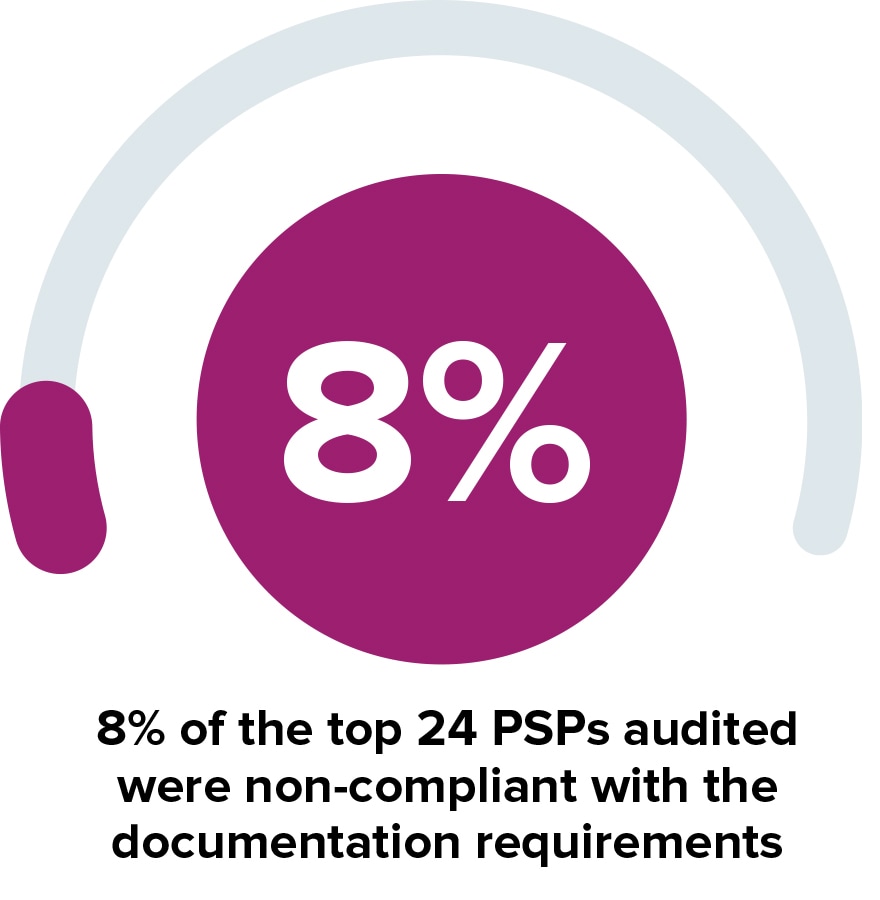
Only two of these PSPs (8%) were non-compliant with the documentation requirements:

  • One PSP admitted it failed to deliver a message to customers that do not receive bills (pre-paid wireless), but it confirmed that it fixed and addressed the issue for the next year.
  • One PSP’s invoices did not contain all of the required information about the CCTS.

The CCTS worked with both providers, and they confirmed their systems and procedures are set up to be compliant with the requirements of the Public Awareness Plan next year.

Most providers (92%) were compliant with the documentation requirements. As noted above, the CRTC’s public opinion poll found that only 2% of respondents who had an unresolved complaint were made aware of the CCTS by their service provider.[7] The CCTS’ 2024-25 customer survey results showed that 7% of customers said that their service provider told them about the CCTS during their efforts to resolve the problem, which is lower than 10% of the customers that responded to this same question in the 2023-24 customer survey.[8]

In light of this finding, the CRTC has initiated a public consultation on improving customer awareness of the CCTS. The CRTC reinstated the proceeding to understand the timing and manner in which service providers inform customers about the CCTS. Notably, the CRTC is considering whether service providers should inform customers about the CCTS at earlier stages in their escalations process.

Conclusion

Ensuring PSPs are compliant with the CCTS’ public awareness requirements is fundamental for customers to easily find out how they can get help with unresolved disputes after trying to resolve them with their telecom and TV service providers. The CCTS has annually checked PSP compliance with this requirement and will continue to engage with more PSPs to ensure they fulfill their responsibilities to promote awareness of the CCTS.

Appendix: Developing Public Awareness of the CCTS

Compliance with the Procedural Code

2025 Compliance Report Cards

Compliance with the CCTS’ Procedural Code

PSPs are required to comply with the complaint-handling process outlined in the CCTS’ Procedural Code. PSP compliance with these requirements is integral to the CCTS’ ability to carry out our role effectively and efficiently.

This report card highlights some observations and trends regarding PSP compliance with the CCTS Procedural Code requirements between August 1, 2025 and January 31, 2026.

Our approach

Our goal is to promote PSP compliance with the CCTS Procedural Code requirements by working with PSPs throughout the complaint process. When PSPs fail to comply with these requirements, it impacts their customers and the effectiveness and efficiency of the CCTS complaint process. For example:

  • If a PSP does not implement a complaint resolution or Investigation Finding, it deprives the customer of the remedy they are entitled to.
  • If a PSP charges the customer fees or threatens the customer for filing a complaint with the CCTS, it punishes the customer for exercising their right to recourse.
  • If a PSP does not cooperate with a CCTS investigation, submits late responses to the CCTS or fails to provide relevant information, the CCTS’ complaint-handling process takes more time.

The CCTS monitors PSP compliance with the complaints process throughout the year. This report highlights some of the PSPs’ non-compliance issues we observed from August 1, 2025, to January 31, 2026 at the mid-point of the CCTS’ fiscal year. The CCTS reports on the full year of compliance activity in our Annual Report.

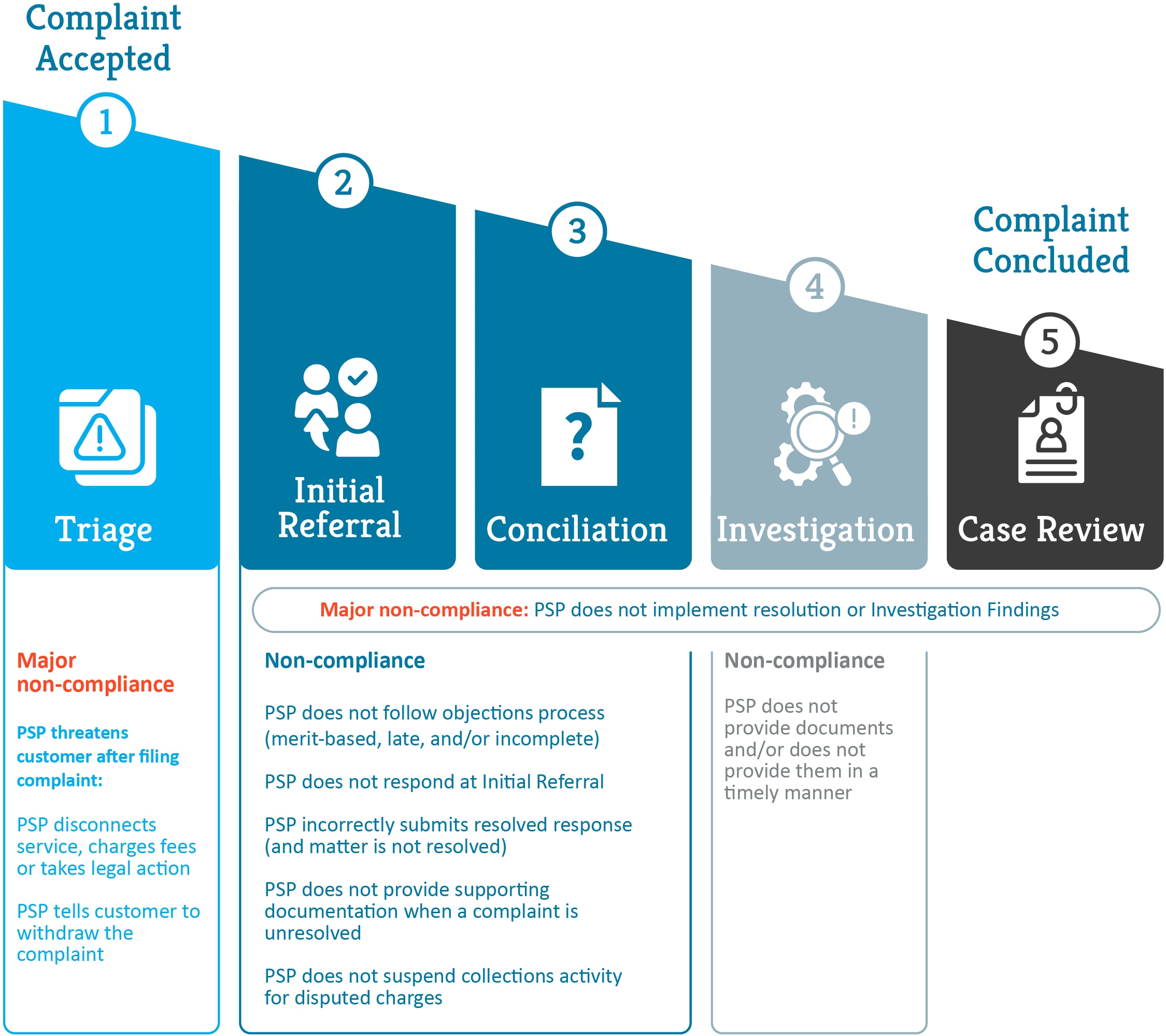
Figure 2.1: How PSPs need to comply with CCTS complaints process

Observations on Procedural Code non-compliance

The CCTS’ Mid-Year Report indicated that the CCTS resolved or issued Investigation Findings in over 14,000 complaints from August 1, 2025 to January 31, 2026. During that six-month period, the CCTS confirmed 12 instances of service providers failing to implement resolutions to which they had agreed, or to implement remedies the CCTS required in an Investigation Finding.

The CCTS observed the following regarding PSP compliance with the complaint-handling requirements of the Procedural Code:

  • PSPs failed to implement resolutions to which they had agreed or failed to implement required remedies for customers in formal Investigation findings.
  • The CCTS terminated the participation of EasyVoice Telecom Inc. for its failure to implement six Investigation Finding Reports – with two of them occurring in the time period for this report. The CCTS required EasyVoice to provide remedies to all six of these customers. To date, the customers have been deprived of the CCTS’ required remedies, such as honouring the customer cancellation and refunding customers for improper charges.

Some PSPs failed to implement resolutions and Investigation Findings

Mutually accepted resolutions[9] and Investigation Findings[10] are binding on PSPs and must be implemented.  When a PSP does not implement a resolution or Investigation Finding, the CCTS considers it to be an instance of major non-compliance with the Procedural Code because the PSP has deprived their customer of the remedy to which they are entitled, such as providing a refund or correcting the customer’s credit report. When a customer informs us and the CCTS determines that the PSP did not fulfill its obligation, the Compliance team works swiftly with the PSP to ensure implementation.

From August 1, 2025, to January 31, 2026, the CCTS identified 12 confirmed instances of PSP failure to implement resolutions and Investigation Findings, which include:

  • 9 instances where the PSPs rectified the matter after engagement with the Compliance team and the customers confirmed receipt of their agreed-upon remedy from the complaint process;[11]
  • 1 instance where the PSP did not rectify the matter and the CCTS is engaging the PSP to ensure the non-compliance is rectified; and,
  • 2 instances of EasyVoice Telecom’s failure to implement Investigation Findings, which we explain in the next section.

This is an increase in the number of PSPs failing to implement resolutions and Investigation Findings. Last year, the CCTS reported 9 confirmed breaches from August 1, 2024 to January 31, 2025. We have confirmed 12 breaches at the mid-point of this year.  Most of these issues arose because the PSP did not implement the resolution in a timely manner.  After the customer contacted the CCTS when they did not receive the resolution they expected, the CCTS reached out to the PSPs to ensure the resolution or Investigation Findings were implemented. After contacting the PSPs, the remedies were implemented but we determined that implementation wasn’t done so in a timely manner. We urge providers to ensure remedies are implemented in a timely manner following the resolution or closure of a complaint.


PSPs must implement resolutions and Investigation Findings

Case Summary

Case summary: PSP delayed carrying out resolution

A customer contacted the CCTS after their provider charged activation fees for two wireless phone lines, which contradicted what the customer was informed they’d be charged.  After submitting a complaint to the CCTS, the PSP and customer mutually agreed on a resolution. The PSP agreed to refund the activation fees ($170) in the form of a cheque.  The PSP advised the CCTS that the complaint was resolved in October 2025.

The customer contacted the CCTS in January 2026 to inform us that they had not yet received the refund cheque.

The CCTS Compliance team engaged the PSP to remind it of its obligation under the Participation Agreement and the Procedural Code to ensure that resolutions are implemented. The Compliance team instructed the PSP to remedy this non-implementation and demonstrate that the refund had been sent to the customer. The PSP complied and subsequently provided confirmation that the customer was issued a new cheque. The customer confirmed shortly thereafter that they had received the refund cheque.

EasyVoice Telecom Inc. CCTS participation terminated for non-compliance

The CCTS terminated the participation of EasyVoice Telecom Inc. (EasyVoice) for depriving six customers of remedies required by the CCTS in six Investigation Finding Reports. Two of these complaints were concluded in the reporting timeframe (August 1, 2025 – January 31, 2026) while the other complaints were concluded in the previous reporting period.

EasyVoice customers complained about issues such as loss of service, cancellation requests being ignored, and being billed after cancelling or when no service was being delivered.  The CCTS engaged EasyVoice during the investigations on multiple occasions and requested documentation for each complaint.

The CCTS issued findings after the investigations into the six customer complaints. We determined that EasyVoice did not adhere to its obligations towards its customers in these complaints, and required that EasyVoice provide remedies to each customer. EasyVoice was unresponsive to the CCTS’s repeated attempts to contact them, and no Case Review request was received for any of the Investigation Finding Reports. Therefore, EasyVoice was deemed to have accepted our findings.

The CCTS investigations required EasyVoice to fix the problems, such as honouring the customer cancellation and refunding customers for improper charges. These EasyVoice customers confirmed they did not receive their required remedies. Participating service providers must implement remedies prescribed by the CCTS.  The CCTS made several efforts to communicate and work with EasyVoice to resolve these issues. When a PSP fails to implement remedies in Investigation Finding Reports, the CCTS considers this major non-compliance with the complaints handling process.

EasyVoice’s termination from CCTS participation due to its failure to rectify the major non-compliance puts the provider in violation of the Canadian Radio-television and Telecommunications Commission’s (CRTC) regulatory requirement to participate in the CCTS.  As a result, EasyVoice customers with unresolved issues no longer have access to CCTS’ independent complaint handling process. The CCTS referred EasyVoice to the CRTC for consideration of potential enforcement action.

Monitoring PSP compliance with the complaint-handling process

For the CCTS to resolve complaints effectively and efficiently, we need PSPs to act responsibly and comply with the CCTS complaint process. When PSPs comply with the rules and cooperate in good faith in the CCTS process, complaints are handled more efficiently and effectively, contributing to customer satisfaction. Ultimately, it is in the interest of all parties – customers, PSPs and the CCTS – to ensure that complaints are handled effectively and efficiently.

We continue to monitor PSP compliance with the rules and report on compliance results. We continue to develop and provide proactive guidance on compliance through videos, knowledge articles and checklists to ensure PSP compliance with the complaint handling rules.

Checklist: Compliance with the CCTS Procedural Code

PSPs must implement resolutions and Investigation Findings

Mutually accepted resolutions and Investigation Findings are binding on PSPs and must be implemented. When a PSP does not implement a resolution or Investigation Finding, the CCTS considers it to be major non-compliance with the Procedural Code because the PSP has deprived its customer of the remedy, such as processing a credit or refund or correcting the customer’s issue (e.g. service reconnection or credit reporting). The CCTS treats these complaints with high priority and takes action right away.

PSPs must not ask customers to withdraw their complaint at the CCTS

PSPs asking a customer to withdraw their complaint at the CCTS is an issue of major non-compliance. When a PSP engages in this behaviour, the PSP is not participating in good faith as it is trying to circumvent the requirement to respond to complaints. This type of situation can create problems later, as the customer will be unable to benefit from the protection of the CCTS Procedural Code if the PSP fails to implement an agreed-upon resolution after the customer withdraws their complaint.

When the CCTS finds out that a PSP has asked a customer to withdraw their complaint, the CCTS informs the customer of their right to continue with the complaint-handling process and explains the risks of withdrawing their complaint. In particular, the CCTS informs the customer that if a complaint is withdrawn, then the CCTS will likely be unable to help ensure that the PSP implements the resolution it promised the customer as the enticement for withdrawing the complaint.

PSPs must not threaten customers with legal action, fees, or disconnection of service because of the CCTS complaint

Customers should not be threatened by a PSP for complaining to the CCTS: it is the customer’s right to seek recourse, and they should not be penalized for exercising that right. The CCTS tracks these allegations and considers them to be instances of major non-compliance when we can reasonably conclude that the PSP engaged in this unacceptable behaviour. The CCTS treats these cases with high priority: we inform the PSP that it is not allowed to make such threats and seeks confirmation that the offending conduct will stop immediately.

PSPs must follow the rules when objecting to complaints

The CCTS Procedural Code allows the CCTS to accept telecom and television-related complaints, with certain exceptions. PSPs have the right to object to the CCTS accepting a complaint if they believe it falls within one of these exceptions. A recent change to the rules now requires PSPs to file objections within 10 days of being informed that the CCTS has accepted the complaint, instead of the previous 15-day timeframe.

When filing an objection, PSPs must clearly state the reason and provide supporting documentation for the CCTS to evaluate its validity. If a PSP objects to a complaint but fails to follow the required procedure, it is considered a breach of the Procedural Code. Common objection-related breaches include submitting an objection late, failing to provide an explanation or supporting evidence, or objecting on an improper basis, such as disputing the merit of the customer’s complaint rather than its eligibility under the rules.

Non-compliance with objection rules causes unnecessary delays in the complaint process and hinders the effectiveness of the CCTS. Each year, we track objection-related breaches, and we will continue monitoring PSP misuse of the objections process.

PSPs must confirm with the customer that a complaint is resolved

If a PSP and customer mutually agree to resolve a complaint at the initial referral stage, the PSP must provide a written response to the CCTS and to the customer indicating that the complaint is resolved. After a PSP tells the CCTS that a complaint is resolved, the customer has 20 days to dispute the response submitted by the PSP. PSPs should only inform us that a complaint is resolved when it has confirmed with the customer that it has reached a mutually accepted resolution, or when it provides the full resolution that the customer requested.

PSPs must respond and provide required information for unresolved complaint

If a PSP and customer cannot agree to a resolution at initial referral, the PSP is required to provide a written response to the CCTS and indicate that the complaint remains “unresolved”.

  • When PSPs provide timely information and documents, the CCTS may review the complaint at the Conciliation stage where we may be able to help conclude complaints earlier in the process, increasing efficiency and cost effectiveness of the CCTS’ services.
  • When PSPs do not provide documentation and/or do not respond at all, the CCTS may proceed directly to an investigation to determine whether the provider met its obligations. The CCTS will seek information from the PSP, and Investigation Findings are issued.

We expect that more PSPs will provide the CCTS with all relevant documents with their unresolved response in the future to get the full benefit of the CCTS’ conciliation processes.

PSPs must provide all requested documentation at Investigation in a timely manner

When the CCTS investigates a complaint at Investigation the CCTS requires PSPs to provide requested documents and information in a timely manner.  It is crucial that PSPs provide this information before the CCTS concludes its Investigation Findings because this information will not be taken into consideration afterwards.  When PSPs fail to provide the requested documents or do not respond in a timely manner, it:

  • delays the investigation of a complaint; and
  • may result in adverse findings against the PSP concerning whether it met its obligations to the customer.

In other words, it is imperative for PSPs to comply with this requirement to avoid unnecessary delays and be afforded the opportunity to provide its “side of the story” to the CCTS during the complaints process.

PSPs must suspend the collections activity on disputed charges

When a customer submits a complaint, PSPs must suspend collections activity for an unpaid charge that the customer is disputing in their complaint, until the complaint is resolved or otherwise concluded. Some examples of the type of collections activity that PSPs should refrain from engaging in include reporting the unpaid charge to a credit reporting agency or bureau, contacting the customer to remind them of an unpaid balance which includes the disputed amount, and threatening to suspend the customer’s service or initiate collections activity if a disputed balance remains unpaid. When PSPs do not comply with this requirement, the CCTS will intervene and ask the PSP to take steps to stop further collections activity against the customer.

Compliance with Financial Requirements

2025 Compliance Report Cards

Introduction

The CCTS is an independent organization that offers its services to Canadians at no cost to customers and is funded on a cost-recovery basis by the Participating Service Providers (PSPs).  To ensure that the CCTS can provide customers with free and effective complaint resolution services, the CCTS requires PSPs to disclose financial information to the CCTS.

Our approach

The CCTS funding model distributes the cost of its operations among PSPs based on a formula that includes the amount of their retail forborne revenues and the number of complaints received from their customers. To apply this formula, PSPs are required to annually certify and disclose their retail revenues to the CCTS.

When PSPs fail to provide financial information, it adds costs, which must be borne by all the other PSPs, and needlessly consumes CCTS resources.

Disclosure of financial information

Every year PSPs are required to provide certified financial information so we can determine their retail forborne revenues. In 2023, the CCTS simplified the process for smaller PSPs with less than $10 million annual retail revenues to require an attestation about their revenues, rather than detailed financial reporting, to reduce the administrative burden for small PSPs.  Despite making the process easier for small providers to complete, we saw a slight increase in levels of non-compliance compared to previous years.

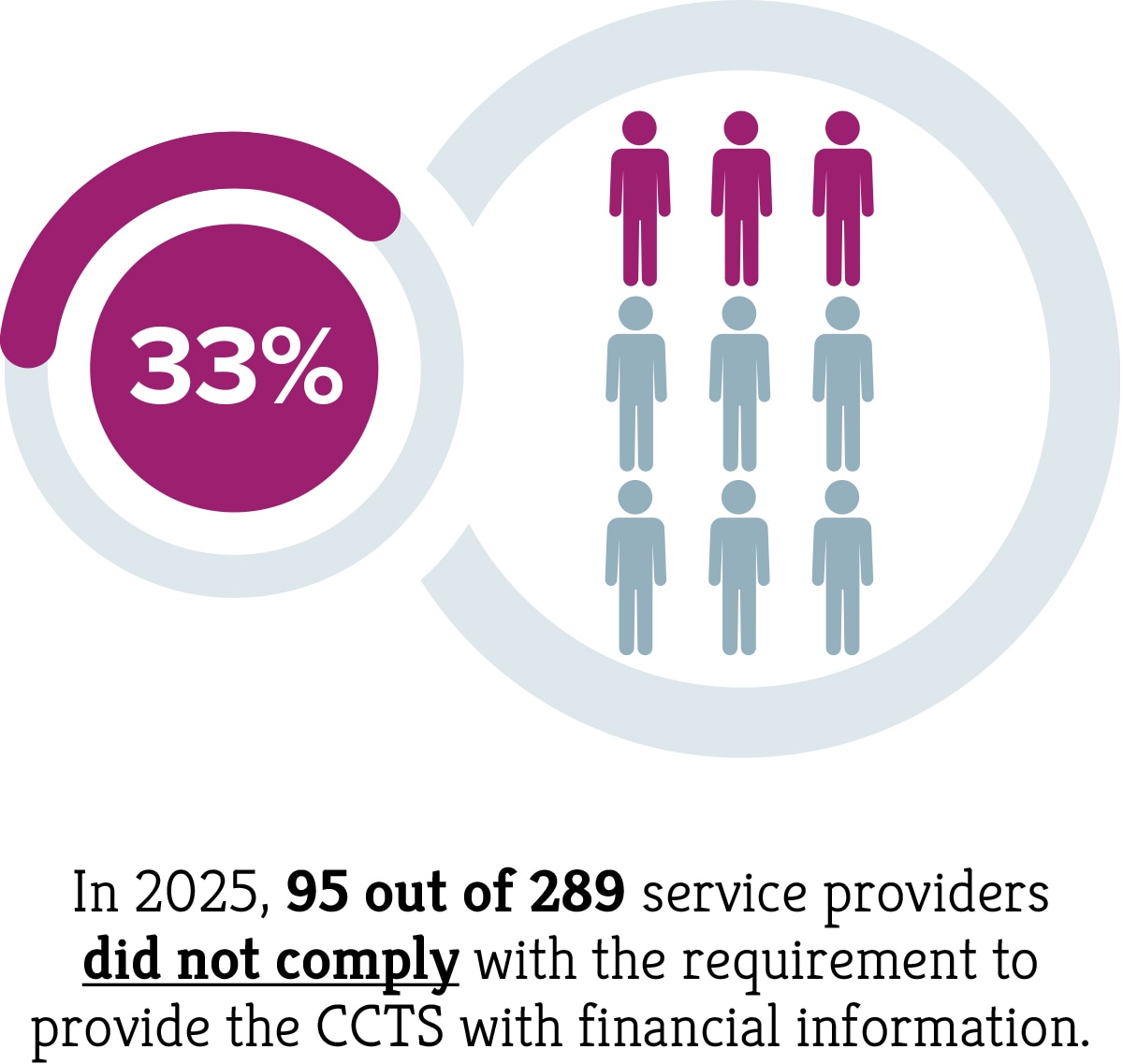
In 2025, 95 out of 289 service providers did not comply with the requirement to provide us with financial information. See Appendix 1 for the full list of non-compliant PSPs.

It is a particularly challenging annual endeavor to obtain financial information from all PSPs, especially from smaller service providers.  This is an administratively burdensome process for the CCTS to request, provide several reminders, and collect this financial information. Nevertheless, most PSPs provide this information to us each year and between 2018 and 2025, PSPs’ average response rate was 73%. In 2025, 194 out of 289 service providers (which is 67%) of PSPs provided this information to the CCTS.

In 2025, 95 out of 289 (33%) service providers did not comply with the requirement to provide the CCTS with financial information

Appendix 1. Participating Service Providers that failed to provide the required financial information

Note: PSPs that were subsequently terminated because they were no longer operating or providing telecom service are indicated by *

  • 0714773 BC Ltd. – Unmetered and Unmetered Clearing House
  • 1085459 Ontario Ltd. – Kingston Online Services
  • 1207901 Ontario Ltd. – Toronto Telecom
  • 1500153 Ontario Limited – Cottage Country Internet
  • 1700247 Ontario Limited – ReachCast
  • 1784150 Ontario Inc. – Tekdata Telecom
  • 2343842 Ontario Inc. – Smart Telecom
  • 2470618 Ontario Inc. – Net Live
  • 307net – 307net
  • 3095959 Canada Inc. – BV Communications and Telemart
  • 4pairless Communications Inc. – 4pairless Communications Inc.
  • 8064555 Canada Corp. – Northern Rural Networks, Astrocom, VillageNet, Batchewana Telecom and Compfitness
  • 9039-4255 Quebec Inc. – Beauce Sans Fil
  • 9045-2855 Québec Inc. – Digicom Internet sans fil
  • 9226-9380 Quebec Inc. – Telico
  • 9249-4129 Quebec Inc. – Allesi Télécom et Sécurité
  • 9257-8368 Québec Inc. – Mazagan Telecom
  • 9326-9108 Québec inc. – EMAK Telecom
  • 9330-9144 Québec inc. – Transat Télécom
  • 9e Bit (2015) Inc. – Connexio
  • Alanik Technologies – Iktel Networks
  • AllCore Communications Inc. – AllCore
  • Arkley Telecom Corp. – National Teleconnect
  • AstraQom International Inc. – AstraQom
  • ATOP Broadband Corp. – Atop TV
  • Canada Relink Inc. – Canada Relink – Call2talk
  • Canadian Car Club Corporation – Canadian Car Club
  • CDMS Inc. – CDMS Inc
  • China Creek Internet LTD. – China Creek Internet LTD.
  • City Wide Communications Inc. – City Wide Communications Inc. and Telarite
  • Cloudli Communications Corporation – Cloudli Communications Corp.
  • Columbia Wireless Inc. – Columbia Wireless
  • Convergia Networks Inc. – Convergia Networks Inc.
  • Cybernet Communications Ltd – Cybernet Communications
  • DCI Telecom – DCI Telecom
  • Dialpad, Inc. – Dialpad, Inc.
  • DID Logic Limited – DID Logic
  • EGC Technologie Informatique Inc. – EGC Telecom
  • E-SatTel.ca Inc. – e-SatTel
  • EspaceNet – EspaceNet
  • eTor Networks – eTor Networks
  • Évolu-net Inc. – Évolu-net
  • FleetTél Inc. – FleetTél
  • FollowTel Inc. – FollowTel Inc.
  • Fonus Limited – Fonus
  • GETUS Communications Ltd. – GETUS Communications Ltd
  • Greater Sudbury Telecommunications Inc. – Agilis Networks
  • Internet Atlantic Inc. – Internet Atlantic
  • Internet Light and Power Inc. – ILAP
  • Internet Papineau Inc. – Internet Papineau Inc.
  • King George Communications – King George Communications
  • Lanctot informatique inc. – Ouilink Communications
  • Linking Telecom Inc. – Link Telecom
  • Maximum ISP Inc. – Max ISP
  • Mektel Inc. – Mektel Inc.
  • Minitel Corporation – Minitel Communications
  • Movita Communications Inc. – Movita Communications
  • Multi-Techniques (RDL) Inc. – Multi Wifi Krt
  • MYBC Datacom Ltd. – MYBC Datacom
  • MySignal.ca – MySignal.ca
  • NCS Managed Services Inc. – NCS Managed Services
  • Netfox Communications Corp. – Netfox Communications
  • North Nova Cable Limited – North Nova Cable
  • Odynet Inc. – Odynet Inc.
  • Paging Network of Canada Inc. – Pagenet
  • Poynt360 Inc. – Poynt360
  • Purple Cow Internet Inc. – Purple Cow Internet
  • PWHR Solutions – PWHR Solutions
  • Quality Speaks LLC – Phone Power
  • Quantum Internet Solutions Ltd. – Quantum Internet Solutions
  • Quantum Xpress Ltd. – Quantum Xpress and Parolink.net
  • Roxborough Telephone Company Limited – OntarioEast.net
  • Scandia ISP Internet Inc. – ISP Canada*
  • Schneider’s Computing Ltd. – Schneider’s Computing Ltd.
  • Services internet Sag-Lac Wimax inc. – UniRéso Télécom
  • Simconet Technologies Inc. – Simconet Technologies Inc.
  • Springtel Communications Inc. – Springtel Communications Inc.*
  • Syban Systems Ltd. – Syban Systems Ltd.
  • Talkit.ca Inc. – Talkit.ca Inc.
  • Tamaani Internet (Kativik Regional Government) – Tamaani Internet
  • Telcan Inc. – Telcan
  • Telesave Communications Ltd. – Telesave Communications
  • TelKel Inc. – TelKel Inc.
  • Telna Inc. – KnowRoaming Ltd.
  • TNEXT Communication Inc. – TNEXT Communication Inc. and GoFibe
  • Total Cable Services Inc. – Total Cable Services Inc.and Nextcom Wireless Networks
  • Truespeed Internet Services Inc. – Truespeed Internet
  • Uniserve Communications Corporation – Uniserve
  • United Online, Inc. – Juno, Netzero
  • Unity Connected Solutions Inc. – Unity Connected Solutions
  • Vodalink Telecom Inc. – Vodalink Telecom
  • VoIP Much Phone Company Inc – VoIP Much Phone Company Inc and Vbuzzer
  • Vox Sun – Vox Sun
  • Voyageur Internet Inc. – Voyageur Internet Inc.
  • Ztar Mobile Canada Inc. – good2Go Mobile

Footnotes

  1. The service providers’ responses to the CRTC are available on the CRTC’s website here: https://applications.crtc.gc.ca/TransferToWeb/2025/2025-274_Responses%20to%20requests%20for%20information.zip
  2. CRTC. Broadcasting and Telecom Notice of Consultation CRTC 2025-274-2 Call for comments – Improving customer awareness of the Commission for Complains for Telecom-television Services Inc. – Reinstating the proceeding with changes to procedure, at para 11.
  3. CCTS 2024-25 Annual Report, “Working with customers: What customers said about their attempts to resolve complaints with service providers” https://pub.ccts-cprst.ca/2024-2025-annual-report/working-with-customers/
  4. Ibid.
  5. In September 2025, we audited 37 PSPs which included:

    • the top 24 PSPs that generated the most CCTS complaints in the previous year, as listed in the 2023-2024 Annual Report, including Shaw Communications Inc. which was combined with Rogers Communications Inc. in this report; (Shaw Communications Inc. was a separate telecom provider in the 2023-24 report and part of the top 25 PSPs. There is no longer operating a separate website for the PSP.)
    • 3 PSPs previously identified as non-compliant; and
    • 10 randomly selected PSPs (previously unaudited). This category ensures that all PSPs, regardless of their size and compliance status, can be reviewed from time to time to determine their compliance with the Public Awareness Plan requirements. Including this year, the CCTS has audited the websites of 273 PSP brands since 2018.

  6. Shaw Communications Inc. – which was a separate telecom provider in the 2023-24 report and part of the top 25 PSPs – was acquired by Rogers and is no longer operating a separate website.  For that reason, the top 25 PSP list for the purposes of this report is now 24 PSPs.
  7. Public Opinion Research Report: “Understanding consumer awareness and satisfaction with the Commission for Complaints for Telecom-television Services (CCTS).” April 2024. See Q17:  https://epe.bac-lac.gc.ca/100/200/301/pwgsc-tpsgc/por-ef/crtc/2024/080-23-e/080-23-report.html#a1.5.
  8. CCTS 2024-25 Annual Report, “Working with customers” https://pub.ccts-cprst.ca/2024-2025-annual-report/working-with-customers/#section3; and, CCTS 2023-24 Annual Report, “Working with customers: Listening to customers – What customers said about service provider public awareness activities” https://pub.ccts-cprst.ca/2023-2024-annual-report/working-with-customers/.
  9. Mutually acceptable resolutions are agreements between the PSP and the customer on a specific outcome or actions to be carried out to resolve a complaint filed with the CCTS.
  10. The CCTS issues Investigation Findings after a complaint is fully investigated. Investigation Findings are a written report of the result of our analysis and assessment of the complaint. We base our Findings on the information and documents the customer and the service provider provide to us. These Findings explain whether the service provider met their obligations to the customer. If they did not meet their obligations, the Findings explain what the provider must do to correct the issueand the provider is required to implement these actions.
  11. 3 complaints with Rogers, 3 complaints with TELUS, 1 complaint with Bell Canada, 1 complaint with Koodo and 1 complaint with Fido.