Topics & trends

Annual Report
August 1, 2024 – July 31, 2025
Table of contents
Overview
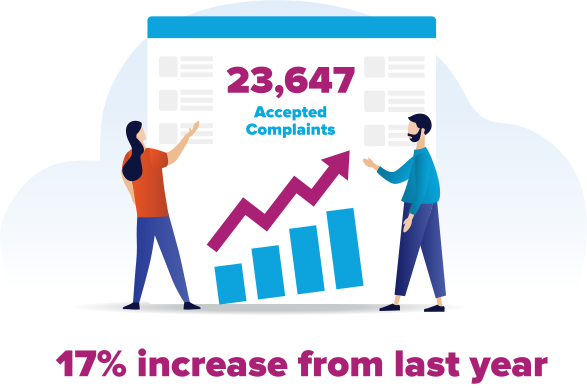
Between August 1, 2024 and July 31, 2025, the CCTS accepted 23,647 complaints from customers across Canada. This represents a 17% increase from last year and is the highest number of complaints accepted in our organization’s history. 86% of concluded complaints were successfully resolved. Most resolved complaints were settled within 20 days.
This year, we concluded a record-breaking 22,094 complaints containing 43,397* issues.
* A single complaint can contain more than one issue. For example, a customer may submit one complaint about both the billing of their internet service and roaming charges related to their wireless service. These would be reported as two issues.
Understanding the landscape of issues
Before taking a closer look at complaint trends, it is helpful to see the overall distribution of issues raised across all service types (wireless, internet, TV, and local phone). The chart below highlights the top 10 issues in 2024–25, showing the volume, share of issues across all service providers, and year-over-year (YoY) change. For a full list of issues raised, see Appendix B: Detailed analysis of issues raised in complaints.
Note: In charts throughout this report, year-over-year increases are shown in red, and year-over-year decreases are shown in green.
The top 10 issues appear in the same order as last year, apart from breach of contract, which replaces repair issues and appointments in sixth place. Notable increases occurred with contract-related issues, such as breach of contract and changes to the contract, which rose by 121% and 34%, respectively.
Issues related to billing and credit also continued to grow, including:
- regular price increase of monthly price plan: 61% increase
- third-party credit reporting: 27% increase
- termination fee: 33% increase
This snapshot provides context for the trends that follow, showing how these issues fit within the broader complaint landscape.
Interpreting the numbers: Insights and emerging trends
Trend 1: Billing issues, on the rise again, remain a top concern for telecom and TV customers
Incorrect monthly charges and missing credits account for the highest volume of billing issues
Billing issues often arise from unclear communication, which can lead to customer confusion or unmet expectations. Billing continues to make up the largest share of issues across all service types. This year, billing issues account for 46% of issues raised, up from 45% last year.
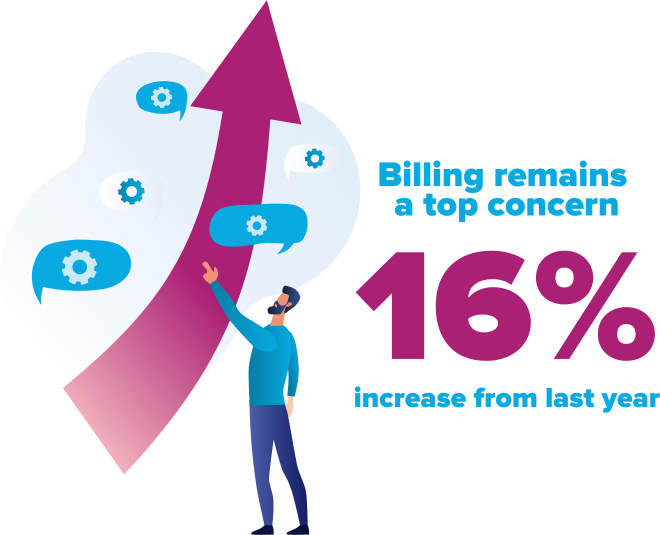
After a decline in 2022, the volume of billing issues rose by 52% in 2023–24, with a further increase of 16% this year. The 20,108 issues (see Figure 7.1) raised represents the highest number of billing issues reported in the last five years and the second highest ever recorded by the CCTS. The resurgence of billing issues comes at a time when Canadian consumers face increasing cost of living and prices for goods and services. This may help explain why people may be more concerned about any billing discrepancies, and may be paying closer attention to their household spending, including their telecom and TV bills.
Four top billing issues stand out across service types:
- Incorrect charges for monthly price plans: accounts for 30% of all billing issues (up 6% year over year).
- Credit or refund not received: accounts for 9% of all billing issues (up 8% year over year).
- Regular price increase of monthly price plan: accounts for 7% of all billing issues (up 61% year over year).
- Billing issues related to rental equipment enters the top 10 list, with a 982% increase (552 issues this year, compared to 51 issues in 2023–24).
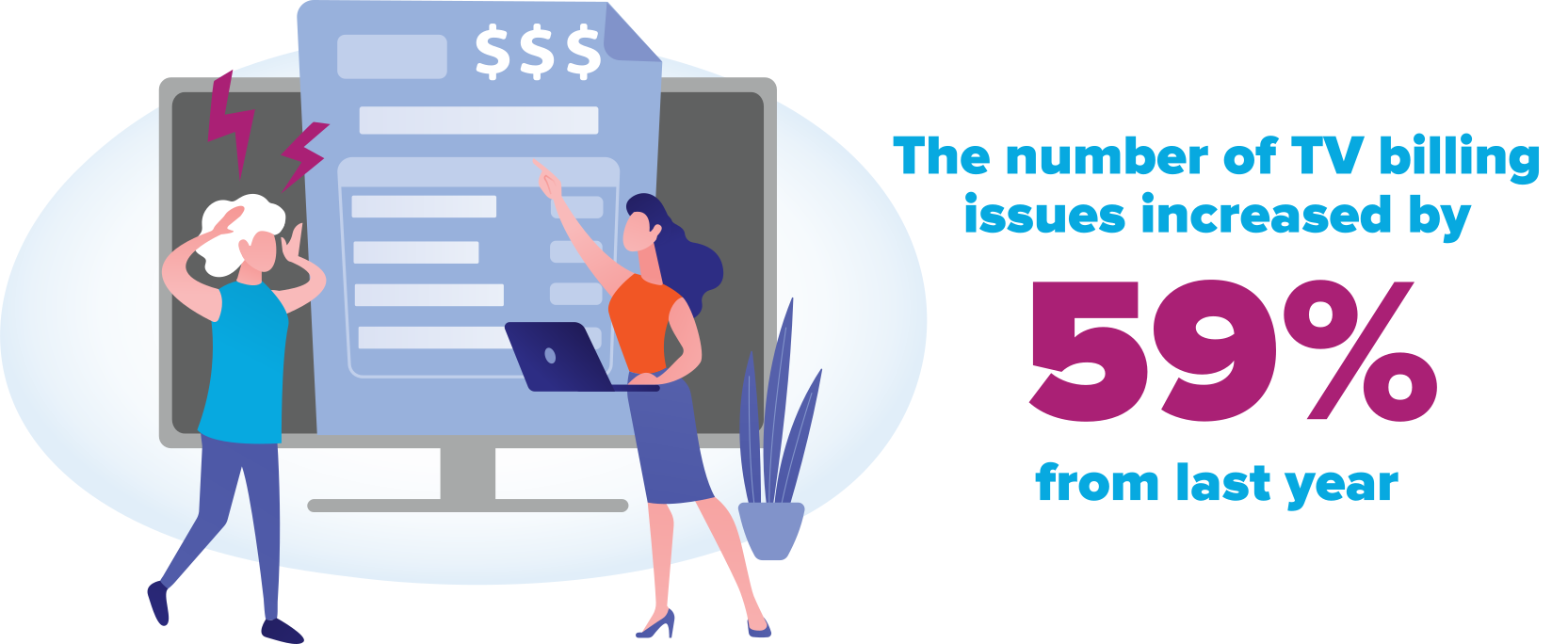
Three of the top 10 issues across all service types are related to billing. The increase in billing issues is consistent across all service types. For TV services, this marks the second consecutive year of increases. After five years of decline, billing issues related to TV rose by 61% last year, followed by a further 59% increase this year. TV-related billing issues now account for 14% of all billing issued reported (up from 11% proportionally last year).
- Wireless billing issues: 13% increase
- Internet billing issues: 9% increase
- TV billing issues: 59% increase
- Local phone billing issues: 9% increase
| Issue | Number |
|---|---|
| Incorrect charge for monthly price plan | 6,001 |
| Credit or refund not received | 3,964 |
| Regular price increase of monthly price plans | 2,930 |
| Equipment charges | 1,009 |
| Deactivation charges/billed after cancellation | 779 |
| Invoices not received | 692 |
| Misapplied payments | 644 |
| Roaming charges | 599 |
| Installation, activation, or reactivation charges | 581 |
| Rental equipment | 552 |
* The average billing resolution rate was 87%.
TELUS’ billing issues rose sharply for the second consecutive year, up 82% year over year after a 56% increase last year. Bell also saw a 22% increase in billing issues, an increase for the second year in a row.
Rogers/Shaw accounts for the highest portion (29%) of billing issues across all service provider brands. Of note, the CCTS combined the Rogers and Shaw brand data into a single brand in this Annual Report, called “Rogers/Shaw.” This reflects the integrated branding of “Rogers together with Shaw.” All year-over-year data comparisons for Rogers/Shaw are compared to combined Rogers and Shaw brand data points from last year.
Case Summary
Billing case summary: Incorrect charges for suspended monthly service plan
A customer filed a complaint with the CCTS stating they were incorrectly billed by their provider for their recurring monthly internet service plan.
We worked with the customer and the service provider to clarify the facts and help resolve the issue. The customer supplied copies of their invoices and explained that their internet service, which was on a month-to-month plan, had been suspended for non-payment but that the provider continued to bill them for service for an additional six months. The additional payments totaled $254.
We worked with the provider to review account billing records and supporting evidence. The service provider was unable to produce any supporting documentation, such as a copy of the agreement, call notes, or invoices showing how the $254 charge was calculated. Our review of the provider’s Terms of Service found no provision allowing it to continue charging a customer during a service suspension, leading us to conclude that these charges were improper.
After reviewing all the evidence and correspondence from both parties, we determined that the service provider failed to meet its obligations to the customer regarding billing practices. Therefore, we required the provider refund $254 to the customer for the improper service charges.
Trend 2: Contract breach issues increased significantly
Contract breach issues increased significantly and often as part of other billing or contract dispute issues
Contract disputes made up 25% of all issues this year. Most of these issues arose when the disclosure of contract terms was unclear, the written agreement conflicted with what the customer agreed to, the provider changed the contract, or the customer and provider disagreed about whether the provider performed its contractual obligations to the customer.
The number of contract dispute issues increased by 17% this year. Of the 10,849 contract dispute issues raised in 2024–25:
- 60% related to compliance with the provider’s terms of service or contract, such as changes to the agreement, breach of contract, termination fee, and compliance with device financing plans.
- 40% were disclosure-related issues, including where the contract conflicted with the agreement, no consent to the agreement, unclear rules, or disclosure of device financing terms.
| Issue | Number | Proportion | Year-over-year (%) |
|---|---|---|---|
| Disclosure issues | 4,303 | 40% | -16% |
| Breach of contract | 2,352 | 22% | +121% |
| Changes to the contract | 2,316 | 21% | +34% |
| Termination fee | 1,480 | 14% | +33% |
| Device financing | 298 | 3% | +61% |
| Renewal of contract | 100 | 1% | +18% |
The following are notable observations about contract disputes this year:
Breach of contract
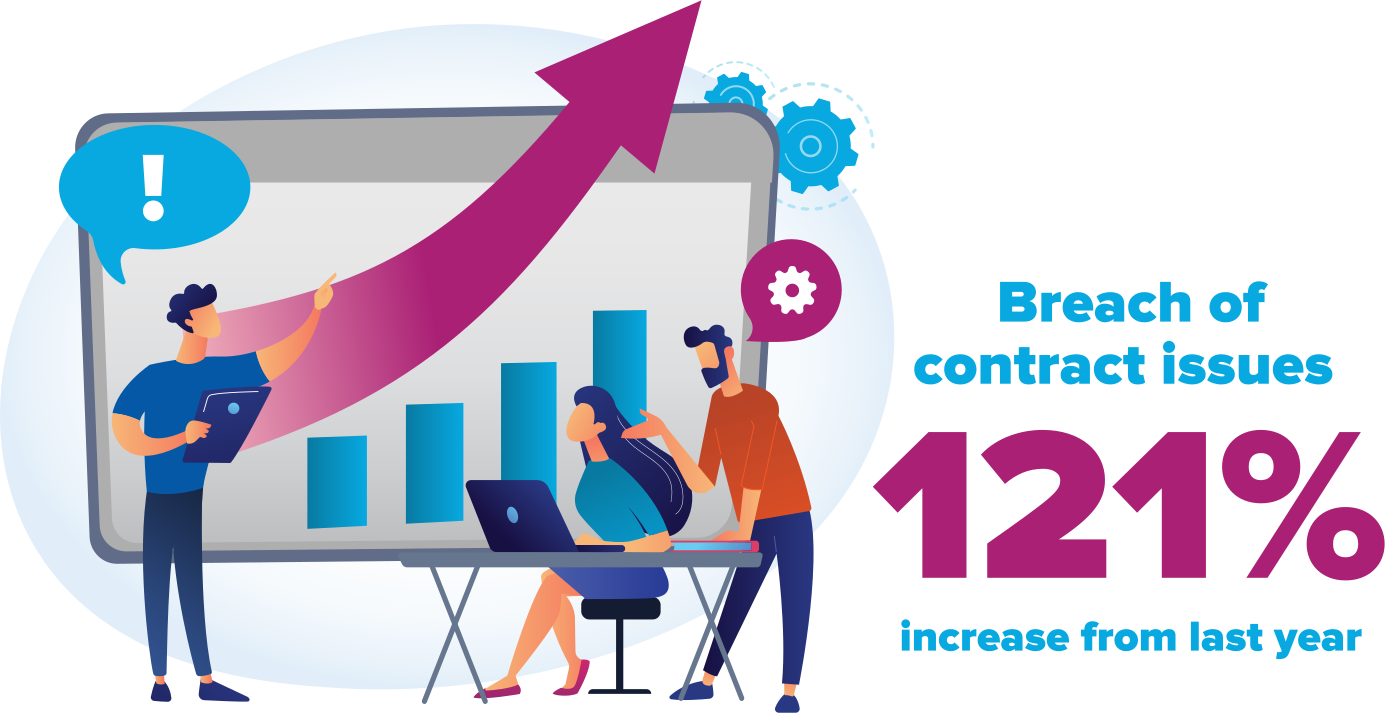
Customers raised more issues this year about their provider not honouring the terms of their contract. Service providers are required to follow their own terms of service, agreements with customers, and any specific offers they have made to a customer. Breach of contract issues can include promised features that were missing, or the provider making an error or taking an action that the customer considers to be a breach of the contract for their agreement or terms of service. These types of concerns, known as contract breach issues, saw a significant 121% increase in the number of issues raised. Breach of contract issues became a top 10 issue this year; this was the sixth most-raised issue.
Complaints containing breach of contract issues often involve additional issues. In fact, 78% of complaints that raised a breach of contract issue that the CCTS investigated also identified one of four related billing or contract issues: incorrect charge for monthly price plan, disclosure issues, credit or refund not received, and regular price increase of monthly price plan.
This overlap in issues is an example of how contract disputes rarely occur in isolation. They are often part of a broader customer concern such as a billing problem that becomes a contract dispute, or vice versa. Analyzing the overlap between breach of contract issues and related complaints helps us better understand both the root cause and the opportunity for providers to avoid contract disputes by improving clarity in communications or ensuring compliance with what was agreed to.
Case Summary
Contract dispute case summary: Contract changed without consent
A customer complained to the CCTS that their internet contract was changed several times over a five-month period without consent, leading to higher costs. The customer contacted the CCTS after their attempts to resolve the contract dispute with their provider were unsuccessful.
When there’s a dispute about what the customer agreed to, we ask the provider to show evidence of the agreement and that it was delivering the agreed-upon services. If the agreement was changed, the provider must also show that it had the right to make those changes and that it followed all necessary steps, such as obtaining consent or providing proper notice to make the change effective.
As part of our complaint investigation, we analyzed billing records, copies of the contract, the provider’s internal system and its account notes for evidence of consent. We also reviewed the customer’s invoices to confirm how charges and credits were applied.
We found that the customer had initially agreed to a 2-year fixed-term contract. The agreed-upon price for the 2-year contract was $66 per month. The provider is subject to the Internet Code, and it does not allow the provider to change terms of the fixed-term contract without the customer’s consent. The provider gave the CCTS a copy of a month-to-month contract, but could not demonstrate that the customer had agreed to change from a fixed-term agreement to a month-to-month agreement. The customer’s invoices showed that the provider had increased the monthly price by $5 per month. Account notes showed no record that the customer was informed of these changes, and the provider could not supply call recordings to prove that the customer had consented.
The CCTS determined that the provider failed to meet its obligations because it failed to notify the customer about the contract change, and failed to get the customer’s consent for the changes. Therefore, the provider was not permitted to change the customer’s monthly service price. The CCTS required the provider to restore the customer’s internet plan to the terms originally agreed upon and to issue a credit for amount the customer was overcharged. In addition, we required the provider to compensate the customer for the inconvenience caused.
Disclosure issues
Although we saw a decrease in disclosure issues this year, this continues to be the most-raised contract dispute problem and the second most common issue overall. It is the only issue within the top 10 issues list that decreased from last year. Customers raised 4,303 disclosure issues across all service types this year — a 16% decrease from last year.
Wireless customers continue to account for most disclosure complaints, making up 57% of all disclosure issues.
Device financing plans
In 2021, the CRTC ruled in a decision that device financing plans fall under the scope of the Wireless Code. The CRTC found that requiring customers to pay the balance of a device financing plan constitutes an early cancellation fee. To inform future reviews of the Wireless Code, the CRTC asked us to track related complaints in our Annual Reports.
For the second year in a row, we saw an increase in device financing plan issues, up 36% year over year (from 328 to 447 issues).
Customers raise these issues in two ways:
- Disclosure of device financing terms: when customers say the service provider did not clearly or accurately inform them about its device financing plan (33% of device financing plan issues).
- Compliance with device financing terms: when customers say the provider did not follow the agreed-upon device financing plan, such as charging the customer the wrong monthly device subsidy or continuing to charge the monthly device subsidy after the device has been fully paid for (67% of device financing plan issues).
* The overall resolution rate was 85.3%.
Trend 3: Customers continue to report service quality and reliability issues
Volume of service delivery issues declined slightly compared to last year
Service delivery issues are problems with the quality, reliability, and management of a customer’s service. These issues, which account for 25% of all issues raised in 2024–25, include the following:
- intermittent service (e.g. slower-than-expected broadband or wireless speeds)
- complete loss of service
- delays to install or cancel services
- difficulties cancelling or porting services
While the overall number of these issues increased this year, the proportion of service delivery issues decreased slightly (down 2%) from last year.
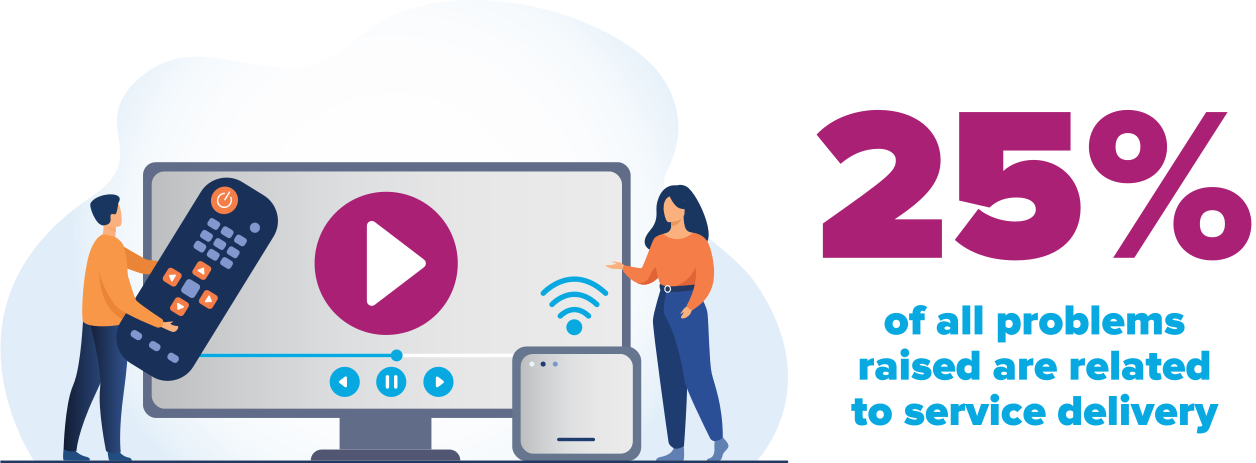
Wireless and internet services account for the largest portion of service delivery issues at 41% and 34%, respectively. We saw a decrease in service delivery issues across service types, except for TV service, which saw a 3% increase in service delivery issues year over year. Overall service delivery issues dropped 2% year over year.
Service delivery issues decreased this year, following three consecutive year-over-year increases. Some Top 10 service providers saw considerable increases in service delivery issues. Notably, Chatr (+274%), TELUS (+47%), and Fizz (+46%) saw considerable increases in service delivery issues.
* The average service delivery resolution rate was 82.5%.
Case Summary
Service delivery case summary: Ongoing internet quality of service on a five-year contract
A small business customer signed a five-year contract with a provider for internet service with download speeds up to 50 Mbps. The customer filed a complaint with the CCTS claiming ongoing intermittent quality of service issues since the start of service.
We reviewed the details of the complaint, the evidence provided by the customer, and the response from the service provider. We worked with the customer to better understand the consistent connectivity problems from the start of the service. We learned through conversations with the customer that their main concern was being locked into a five-year contract despite poor service.
The customer wanted to cancel their services with the provider without incurring a penalty; however, the customer and provider were unable to reach an agreement during our Conciliation process. The CCTS investigated the complaint to formally assess whether the provider met its obligations to the customer.
During the Investigation stage, we reviewed all evidence thoroughly and requested additional documentation to examine the matter in detail. In this case, internet speed test reports revealed that the customer’s download speeds were less than half of the promised level. The customer provided us with evidence of multiple unresolved service tickets. Despite this, only one service ticket was found in the PSP’s system, and the service ticket was closed, despite the problem not having been resolved. We found that the provider’s internal troubleshooting documentation was incomplete.
Our investigation found that the provider could not demonstrate that it had followed its troubleshooting policy to correct the service issue. As such, the customer had not received the level of service promised by the service provider. We issued an Investigation Finding explaining our analysis and required the provider to release the customer from the five-year contract without penalty, as the provider failed to deliver the contracted service quality and fulfill its troubleshooting obligations.
Trend 4: Credit reporting issues increased for the second year in a row
Credit reports can affect financial health, career opportunities, and access to credit
While credit management issues account for a small share of total issues, these can have a significant potential impact on customers. When a provider makes a negative report to a third-party credit bureau, it can affect the customer beyond their telecom and TV services. Credit reports can impact a customer’s financial standing, employment, or access to credit. In these cases, a customer may submit a complaint that their provider improperly reported their account to a collection agency or credit bureau. These are often disputes over how the provider handled the customer’s credit information and how it affected their credit history.
Credit management issues account for 4% of all issues raised in 2024–25. Of these complaints, 59% of issues are attributed to wireless services, 27% to internet, 9% to TV, and 5% to phone services.
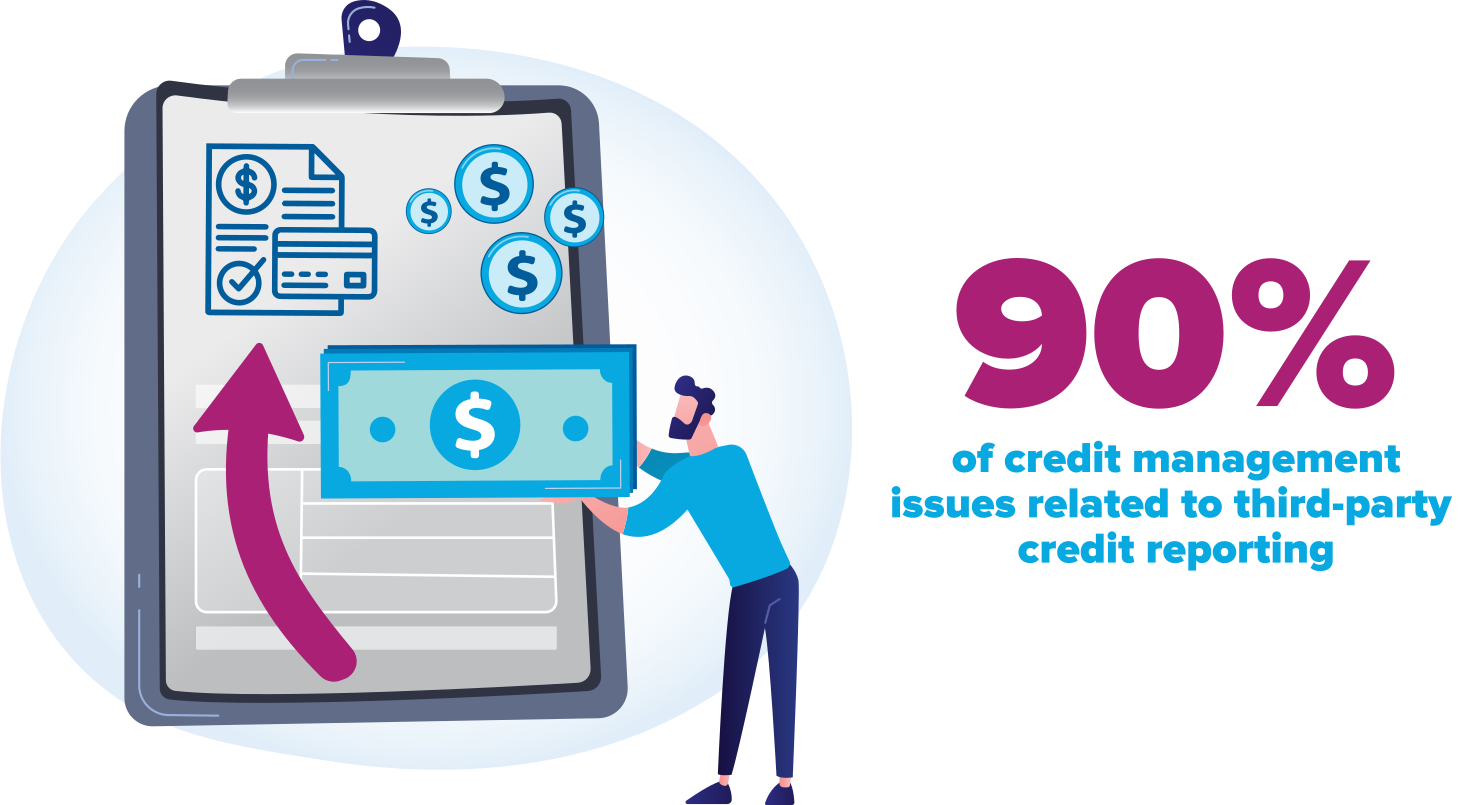
For the second year in a row, we saw an increase in credit management issues. This was a 22% increase from 2023–24. Third-party credit reporting represents 90% of credit management issues and increased by 27% year over year.
The remaining 10% of credit management issues are about credit deposits or limits. These include security deposit requirements, amounts, refunds, and interest.
by service type
Case Summary
Credit management case summary: Improper credit report on closed account
A customer filed a complaint with the CCTS, stating that their wireless provider had reported their unpaid account to a credit agency, but the customer believed their payments were up to date. The customer contended that this action negatively affected their credit score.
The CCTS contacted the customer to ensure they understood our neutral role and to explain our process. We also reached out to the service provider to clarify its position and gather necessary evidence.
The customer told us that they had requested to port their number to another provider. The customer said that several representatives from their previous provider had confirmed they owed nothing for the closed account, but the provider’s records did not support that claim.
We reviewed the monthly invoices for the period in question, noting that an email was sent to the customer outlining what they should expect on the final bill, including any prorated recurring monthly charges remaining for the account. After the account was adjusted for the remaining service period, a small balance remained, which the customer did not originally pay.
We also reviewed the Customer Service Agreement, which states that the customer permits the provider to share credit information, including payment history, with consumer reporting agencies at any time. The CCTS found that the provider had acted in accordance with these terms and met its contractual obligations. The provider was within its rights to report the unpaid balance to credit bureaus once the account became delinquent. However, in this case the provider demonstrated that they did not refer the customer to a third-party collection agency or to a credit bureau.
Therefore, we found that the provider met its obligations to the customer. We further noted in our Investigation Finding that the customer had since paid the final balance owed to the provider.
Spotlight on services
While themes like billing, contracts, service delivery, and credit management show types of problems consumers face, this section shows how these issues map to wireless, internet, TV, and phone services. This helps identify where customers’ pain points are concentrated and whether certain services consistently generate a higher complaint volume or specific types of issues.
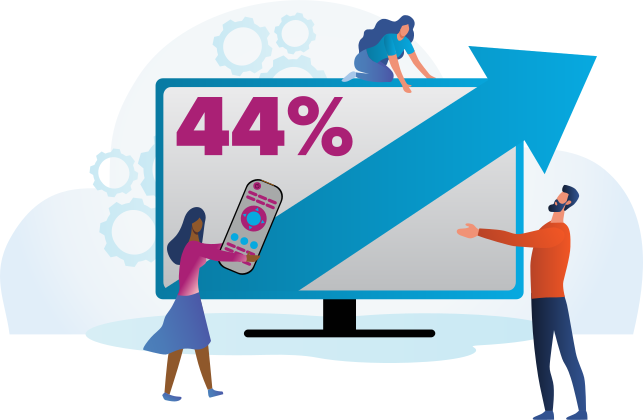
This year, there was a notable increase in issues pertaining to TV services. While issues across other service types grew between 4 and 9%, issues related to TV services increased by 44% this year.
Wireless services
Wireless continues to be the most complained about service, accounting for 51% of all issues. Wireless issues increased by 9%, from 20,161 issues to 22,020 issues. There were more wireless issues raised this year than in any of the last five years.
Billing remains the top category of issues for wireless services, with an increase of 13% from last year.
Wireless service delivery issues increased marginally by 0.5% from last year, and wireless contract dispute issues increased by 7%. Wireless disclosure issues decreased by 17%. Table 7.9 shows the key issues that increased year over year and contributed to the overall rise in wireless issues.
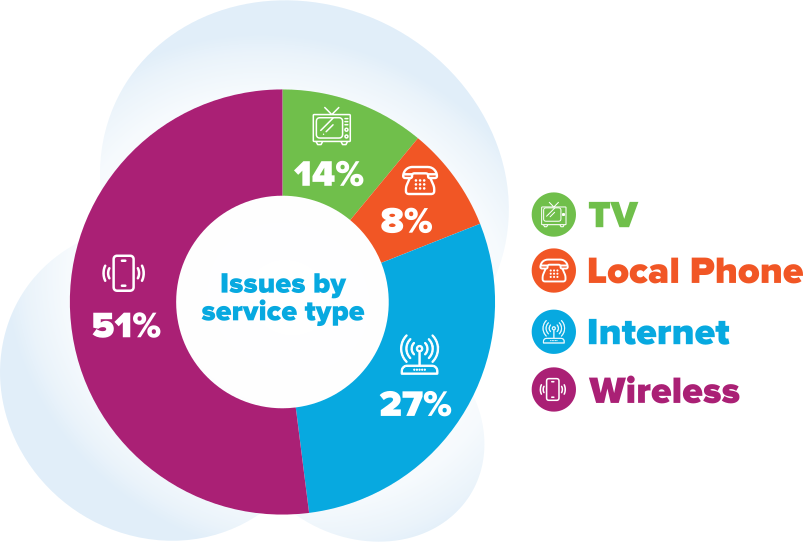
Within the Top 10 wireless issues categories, the following issues were the primary contributors to the overall increase in wireless issues:
- breach of contract issues: 80% increase
- regular price increase of monthly price plan: 53% increase
- third-party credit reporting: 27% increase
- credit or refund not received issues: 14% increase
| Issue | Number | Proportion | Year-over-year (%) |
|---|---|---|---|
| Incorrect charge for monthly price plan | 3,061 | 14% | +8% |
| Disclosure issues | 2,443 | 11% | -17% |
| Credit or refund not received | 2,415 | 11% | +14% |
| Quality of service | 1,599 | 7% | +10% |
| Breach of contract | 1,361 | 6% | +80% |
| Changes to the contract | 1,199 | 5% | +15% |
| Regular price increase of monthly price plans | 1,179 | 5% | +53% |
| Third-party credit reporting | 917 | 4% | +27% |
| Roaming charges | 599 | 3% | +3% |
| Complete loss of service | 581 | 3% | +13% |
Internet services
Internet issues account for the second-largest volume of issues across service types, with 27% of all issues raised by customers this year.
The number of internet issues increased by 7% this year, after a 50% increase in 2023–24. The most-raised internet issue is incorrect charge for monthly price plan, representing 14% of all internet issues, down 1% in share.
These are the primary contributors to the rise in internet issues:
- regular price increase of monthly price plan: 42% increase
- termination fees: 49% increase
- breach of contract: 182% increase
Internet issues related to quality of service and disclosure saw decreases; however, these issues continue to represent a large portion of internet issues: 10% and 9%, respectively.
| Issue | Number | Proportion | Year-over-year (%) |
|---|---|---|---|
| Incorrect charge for monthly price plan | 1,682 | 14% | +3% |
| Quality of service | 1,177 | 10% | -5% |
| Disclosure issues | 1,081 | 9% | -13% |
| Credit or refund not received | 975 | 8% | -2% |
| Regular price increase of monthly price plans | 886 | 7% | +42% |
| Termination fee | 701 | 6% | +49% |
| Complete loss of service | 585 | 5% | -4% |
| Due dates not kept or delay for installation or cancellation of service | 539 | 5% | +7% |
| Breach of contract | 530 | 4% | +182% |
| Repair issues and appointments | 453 | 4% | -36% |
TV services
Issues about TV services are at a five-year high this year, with a 44% increase following a 47% increase last year. TV issues represent 14% of all issues raised, up from 11% last year.
Notably, TV billing issues increased by 59% from last year. TV customers raised more issues about incorrect charges for monthly price plans (17% increase) and regular price increase of monthly price plan (152% increase), as well as a significant increase in rental equipment charge issues.
TV customers raised more contract disputes (43% increase). These were largely about changes to the contract and breach of contract, which saw a 212% and 388% increase, respectively.
| Issue | Number | Proportion | Year-over-year (%) |
|---|---|---|---|
| Incorrect charge for monthly price plan | 791 | 13% | +17% |
| Changes to the contract | 587 | 10% | +212% |
| Regular price increase of monthly price plans | 574 | 9% | +152% |
| Disclosure issues | 506 | 8% | -6% |
| Quality of service | 502 | 8% | +18% |
| Rental equipment | 502 | 8% | +2,689% |
| Credit or refund not received | 366 | 6% | +5% |
| Breach of contract | 317 | 5% | +388% |
| Unable to cancel | 229 | 4% | +48% |
| Termination fee | 215 | 4% | +75% |
Phone services
Local phone services account for 8% of all issues, proportionally unchanged year over year. The number of issues raised about local phone services increased by 5% this year.
Billing issues and contract disputes increased by 9% and 8%, respectively. Notable phone issue increases included:
- regular price increase of monthly price plan: 60% increase
- unable to port: 33% increase
- breach of contract: 178% increase
- termination fee: 14% increase
| Issue | Number | Proportion | Year-over-year (%) |
|---|---|---|---|
| Incorrect charge for monthly price plan | 437 | 13% | -6% |
| Regular price increase of monthly price plans | 288 | 9% | +60% |
| Complete loss of service | 283 | 9% | 0% |
| Disclosure issues | 266 | 8% | -21% |
| Quality of service | 262 | 8% | +6% |
| Credit or refund not received | 196 | 6% | +3% |
| Unable to port | 190 | 6% | +33% |
| Breach of contract | 142 | 4% | +178% |
| Repair issues and appointments | 139 | 4% | -24% |
| Termination fee | 129 | 4% | +14% |
Additional data
Top complaint issues by service type
Select from the dropdown menu below to display the proportion of an issue by type of service.

Top complaint issues by service provider
In this Annual Report, the CCTS combined the Rogers and Shaw brand data into a single brand, called “Rogers/Shaw.” This reflects the integrated branding of “Rogers together with Shaw.” All year-over-year data comparisons for Rogers/Shaw compare to combined Rogers and Shaw brand data points from last year.
| Top billing issues | Service provider | Number of times issue was raised | Proportion of issue |
|---|---|---|---|
| Incorrect charge for monthly price plan | Rogers/Shaw | 1,402 | 27% |
| TELUS | 1,713 | 29% | |
| Bell | 1,052 | 16% | |
| Credit or refund not received | Rogers/Shaw | 942 | 24% |
| TELUS | 856 | 22% | |
| Bell | 808 | 20% | |
| Regular price increase to monthly price plan | Rogers/Shaw | 969 | 33% |
| TELUS | 660 | 22% | |
| Bell | 548 | 19% |
| Top contract issues | Service provider | Number of times issue was raised | Proportion of issue |
|---|---|---|---|
| No consent or contract conflicts with agreement | Rogers/Shaw | 1,182 | 31% |
| TELUS | 1,044 | 28% | |
| Bell | 597 | 16% | |
| Breach of contract | Rogers/Shaw | 682 | 29% |
| TELUS | 599 | 25% | |
| Bell | 410 | 17% | |
| Changes to the contract | Rogers/Shaw | 983 | 42% |
| TELUS | 402 | 17% | |
| Public Mobile | 244 | 11% | |
| Rules related to the agreement are unclear | Rogers/Shaw | 138 | 36% |
| TELUS | 72 | 19% | |
| Bell | 43 | 11% | |
| Termination fee | Rogers/Shaw | 624 | 42% |
| TELUS | 328 | 22% | |
| Bell | 242 | 16% |
| Top service delivery issues | Service provider | Number of times issue was raised | Proportion of issue |
|---|---|---|---|
| Quality of service | Rogers/Shaw | 847 | 24% |
| TELUS | 747 | 21% | |
| Bell | 698 | 20% | |
| Complete loss of service | TELUS | 300 | 18% |
| Rogers/Shaw | 341 | 20% | |
| Bell | 326 | 19% | |
| Unable to cancel | Rogers/Shaw | 284 | 24% |
| TELUS | 266 | 23% | |
| Public Mobile | 183 | 16% | |
| Due dates not kept or delayed for installation or cancellation of services | Rogers/Shaw | 229 | 20% |
| TELUS | 235 | 21% | |
| Bell | 203 | 18% |
| Top credit management issues | Service provider | Number of times issue was raised | Proportion of issue |
|---|---|---|---|
| Third-party credit reporting | TELUS | 466 | 30% |
| Rogers/Shaw | 398 | 25% | |
| Bell | 234 | 15% |
* The average disclosure resolution rate was 87%.